


All News


Othman Boularas wins bronze medal at World Taekwondo Championship
Doha: Qatar's national team player Othman Boularas won the bronze medal in the Online World Taekwondo Poomsae Championship "Challenge 3", organized by the International Federation of the Game, for five days, with the participation of 123 countries.The tournament witnessed also the participation of the Qatari national team players Mansour Lazam, under 50 category and Huda Akbar, under 40 category.Boularas managed to win the bronze medal of under-40 category which brought together 18 countries.Qatar Taekwondo, Judo and Karate Federation general-secretary Eid Ali Al Muraikhi expressed his great satisfaction on Boularas's achievement.He praised the great achievements that the player has made on the global level as he raised the Qatari flag in various international events.



Countdown to FIFA Arab Cup 2021 Begins
DOHA - Countdown for the 10th edition of the FIFA Arab Cup has begun, which will be hosted by the State of Qatar for the second time in its history from Nov. 30 to Dec. 18, with the participation of 16 teams under the supervision of FIFA.
Preparations are currently in full swing to organize an ideal tournament that will be a rehearsal for the 2022 FIFA World Cup Qatar. The matches will be held on six of the eight World Cup stadiums, namely Al Bayt Stadium in Al Khor, Al Janoub Stadium in Al Wakrah, Ras Abu Aboud Stadium, Al Thumama Stadium, Education City Stadium and Ahmed bin Ali Stadium.
The FIFA Arab Cup returns in 2021 after a nine year hiatus. The last Arab Cup was held in Saudi Arabia in 2012, in which Morocco became champions after beating Libya 3-1 on penalties in the final match.
It is not strange for Qatar, which has hosted major global sporting events across all sports, to present an exemplary and distinct FIFA Arab Cup, as Qatar possesses the most modern sports facilities in the world and the capabilities that made it the center of international sports for many years.
The State of Qatar is known for its distinguished international organization in hosting many tournaments and events, which were praised by all athletes, visitors and sports officials in the world.
The FIFA Council officially approved the 2021 Arab Cup during the 15th meeting of the Council held at its headquarters in Zurich in March 2021.
FIFA President Gianni Infantino confirmed that the approval of the Arab Cup by the FIFA Council in Qatar 2021 was among the events that the State of Qatar will organize in preparation for the 2022 FIFA World Cup.
The best nine teams based on the FIFA World Ranking for Dec. 2021 will participate in the tournament, which qualified directly for the group stage, while the remaining 14 teams played in the preliminary round, and seven of them qualified for the group stage.
The group stage draw was held on April 27, 2021 in Katara Opera House, Doha. The group stage consists of four groups which includes four teams. The top two teams from each group will qualify for the quarterfinals, and the final match of the tournament will be held on Dec. 18, corresponding to the State of Qatar's National Day.
Group A of the FIFA Arab Cup consists of Qatar, Iraq, Oman and Bahrain. Group B consists of Tunisia, UAE, Syria and Mauritania. Group C consists of Morocco, Saudi Arabia, Jordan and Palestine. Group D will consist of Algeria, Egypt, Lebanon and Sudan.
The first edition of the Arab Cup was hosted in Lebanon in 1963. Tunisia won the first title of the Arab Cup. The Iraqi national team is the most winner of the Arab Cup with four titles. Saudi Arabia was crowned twice, while Tunisia, Egypt and Morocco each with one title.
Saudi Arabia hosted the last edition of the tournament in 2012, with the participation of 11 teams. Morocco won the tournament after defeating Libya in the final.
Jordan and Kuwait were the most participating teams in the tournament, as they each participated eight times, while Mauritania, Oman and the UAE were the least teams to take part in the tournament, with one participation for each.
Seven countries have hosted the Arab Cup. Kuwait and Saudi Arabia have each hosted twice, while Qatar, Lebanon, Iraq, Jordan and Syria have each hosted the tournament once.
The idea of organizing a championship for the Arab teams was launched from Lebanon, The first edition was held in 1963 in Beirut during the period between April 1-10, with the participation of five teams, which are Syria, Lebanon, Tunisia, Kuwait and Jordan. The Tunisian team won by obtaining seven points, after three victories and one draw. The Syrian team came second with six points, and the host Lebanese team came third with five points.
The former Lebanese player, Adnan Al Sharqi, was the first to score a goal in the tournament against Kuwait national team. The Arab Cup top scorer award went to Tunisian Sherif Tlemceni, after he scored five goals.
One year later, in 1964, the second edition of the FIFA Arab Cup was held in Kuwait City, from Nov. 13 to 20, with the participation of Kuwait, Jordan, Libya, Iraq and Lebanon only. The Iraq came first with seven points, while Libya came in second place with six points. The Iraqi player Hisham Atta Ajaj was crowned the tournament's top scorer after scoring five goals.
The third edition of the championship was held in 1966 in Baghdad from April 1 to 10. More teams participated in the tournament, unlike the previous editions, as 10 teams were divided into two groups. In the second group, the Iraqi team qualified after leading the group with seven points, and Lebanon qualified second with the same number of points in the same group.
The Libyan team led the first group with six points, and the Syrian team followed it with five points. After the first and second of the two groups qualified for the semi-finals, the Syrian team defeated Lebanon 1-0, and the Iraq team defeated Libya 3 -1. In the final, Iraq beat Syria with 2-1. Thus, Iraq won its second title in the Arab Cup. In the match for third place, the Libyan team defeated Lebanon 6-1. Libyan player Ali Al-Baski won the title of top scorer after scoring 10 goals.
The Arab Football Cup was halted for 16 years, then returned in 1982. Then it was decided that the tournament be held in Lebanon, but it was halted again due to the Israeli-Lebanese war after the Arab teams participated in the preliminary qualifiers. The tournament returned again and its fourth final qualifiers were held in Taif, Saudi Arabia, from July 3 to 12, in which six teams participated divided into two groups.
In the first group, Saudi Arabia qualified with four points, as well as Qatar with two points. In the second group, Bahrain and Iraq teams qualified with three points for each. In the semi-finals, Iraq defeated Saudi Arabia 3-2, and the Bahrain team beat Qatar 5-2 on penalty kicks, after the end of the match time with a goal for each. In the final match, Iraq defeated Bahrain 1-0. The third-placed teams were decided on penalties which ended 4-1 in favor of Saudi Arabia.
The fifth edition of the Arab Cup was held in the Jordanian capital, Amman, during the period from July 8 to 21, 1988, where ten teams participated. Jordan and Syria qualified from the first group with five points, and from the second group, Egypt qualified with six points, while Iraq qualified with five points. In the semi-finals, Iraq defeated Jordan 3-0. In the final, Iraq defeated Syria by penalty shootouts 43 after the match ended 11 draw, so Iraq won the fourth championship in a row. In the third-place match, Egypt defeated Jordan 2-0.
The sixth edition of the Arab Cup was held from Sep. 4 to 18, 1992, in Aleppo, Syria. Six teams participated in it and were divided into two groups. Egypt topped the first group with six points, and Kuwait came second with three points. In the second group, Saudi Arabia qualified with four points, and Syria with two. In the semi-finals, Saudi Arabia qualified after beating Kuwait 2-0 and Egypt qualified after beating Syria 4-3 by penalties.
In the final, Egypt defeated Saudi Arabia 32. In the third-place match, Kuwait beat Syria 21. The tournament's top scorer was the Kuwaiti player Hamad Al-Saleh, with three goals.
The seventh edition of the Arab Cup was held in Qatar in 1998, from Sep. 22 to Oct. 1, with the participation of 12 teams, the largest number in the history of this tournament. The teams were divided into four groups. The first from each group qualified for the semi-finals. Qatar qualified from group A with six points, Kuwait from group B with six points, the UAE from group C with three points and Saudi Arabia qualified with six points from group D.
In the semi-finals, Saudi Arabia beat Kuwait 2-1, and Qatar beat the UAE with the same result. In the final, the Saudi team defeated Qatar 3-1, and the UAE team defeated Kuwait 4-1 in the third-place match. Qatar's Mubarak Mustafa was chosen as the best player in the tournament, Saudi Arabia's Obaid Al-Dosari was the tournament's top scorer with eight goals, and Saudi Arabia's Mohammed Al-Deayea was chosen as the best goalkeeper in the tournament.
The eighth Arab Cup tournament was held in 2002 in Kuwait City again, from Dec. 16 to 30, with the participation of ten teams which were divided into two groups. From Group A, Jordan qualified with eight points and Morocco with five. From group B, Saudi Arabia qualified with ten points and Bahrain with seven. In the semi-finals, Saudi Arabia beat Morocco 2-0, and Bahrain beat Jordan 2-1. In the final, Saudi Arabia defeated Bahrain with the golden goal, after the match ended in a goalless draw.
The ninth Arab Cup tournament was held in 2012 in Saudi Arabia again from June 22 to July 6, with the participation of 11 teams which were divided into three groups. From group A, Saudi Arabia qualified with four points, and from group B, Morocco and Libya qualified with seven points. From Group C, Iraq qualified with seven points.
In the semi-finals, Libya beat Saudi Arabia 2-0 and Morocco beat Iraq 2-0. In the third and fourth-place match, Iraq beat Saudi Arabia 1-0 to achieve the third place. In the final match, Morocco defeated Libya 3-1 by penalties shootouts, after the original and extra time ended in a 11 draw, to win the first title in its history.
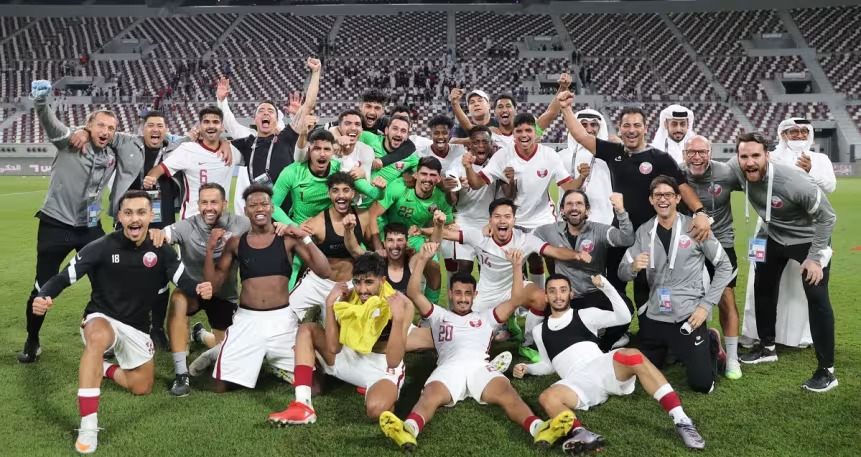
Team Qatar qualify for AFC U23 Asian Cup Uzbekistan 2022
Doha: Qatar booked a spot in the AFC U23 Asian Cup Uzbekistan 2022 following a 1-1 draw with Syria in their final Group A qualifying tie on Sunday.
The result took Qatar to seven points for top spot while Syria finished second on five but face a nervous wait to know whether they will advance as one of the best second-placed teams.
Yemen, meanwhile, ended their campaign with a 1-1 win over Sri Lanka in Group A's other match on Sunday.
Syria came into the tie needing three points to pip Qatar to the top spot and they started promisingly.
They pressed high in the opening minutes as Qatar were forced to defend deep and Syria's early aggression paid off when they took the lead in the 18th minute.
Qatar failed to cleanly clear a corner and the ball landed invitingly for Ali Bashmani, whose shot took a deflection before settling in the back of the net.
Stung into action, Qatar pressed forward and came close on several occasions but had to wait till the 45th minute for the equaliser.
A clumsy challenge by Diaa Alhak Al Mohammad saw Ahmed Al Ganehi brought down in the penalty area with Mohammed Waad sending the ball past a diving Mohamad Anas Al Bittar.
Syria held the major share of possession in the second half but the goal they needed eluded them as Qatar held on for a draw which assured them top spot in the group.
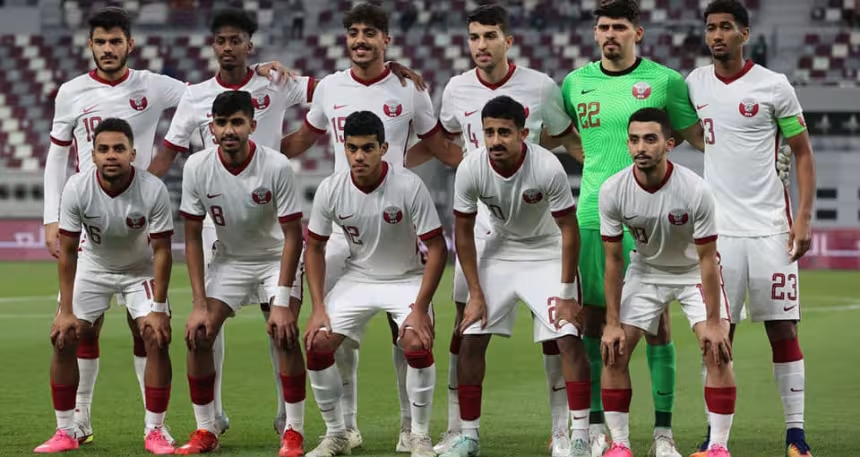
Qatar to take on Syria in AFC U23 Asian Cup Qualifiers
Doha: Team Qatar will take on Syria in matchday three of the AFC U23 Asian Cup Uzbekistan 2022 Qualifiers on Sunday.
Qatar lead Group A with six points and only need to avoid defeat against Syria to qualify.
Syria, on four points, will have to defeat Qatar to book the sole automatic spot to the Finals from the group while Yemen and Sri Lanka’s dreams were dashed.
Team Qatar began their campaign in the qualifiers with beating Yemen 3-0 then they trounced Sri Lanka 5-0 on Thursday.
Winners of 11 qualifying groups and four best runners-up will join hosts Uzbekistan in the 16-team final round next year.
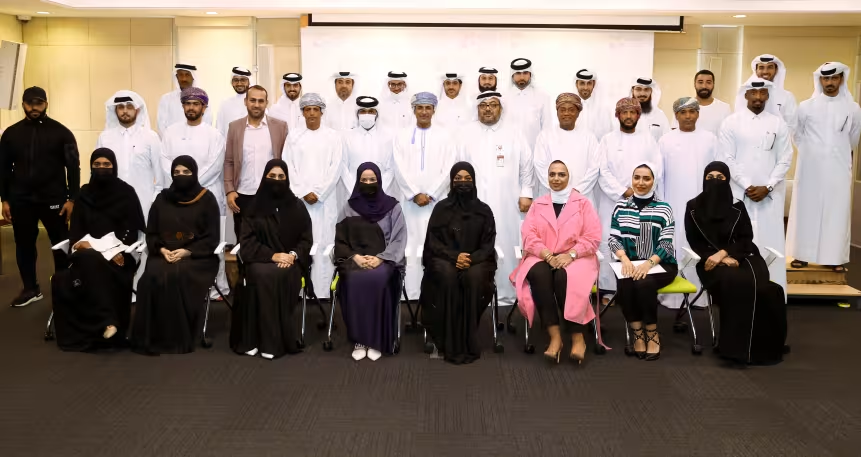
QOA course on modern management of sport organizations concludes
DOHA - The Qatar Olympic Academy (QOA) , in cooperation with the IOC Olympic Solidarity Commission concluded on Thursday a pioneering five – day training course “ Modern Management of Sport Organizations” being organized at the QOA Headquarters in Doha.
This course was the first one that attended personally by more than 45 trainees, after a one year and seven months stop period due to COVID-19 pandemic . During that period all courses were held online as announced by the QOA in March last year.
The course key speaker, Dr. Sulaiman bin Ali Al Baloushi, Executive Director of Oman Olympic Committee and former Omani Basketball Federation delivered a series of presentations about the values of management skills, effective communication, work environment management and team work to achieve the objectives of the sport organizations and to meet their highest standards of performance .
This course was mainly aims to increase the learning and field experience of the QOC’s administrative employees and others and helping them to turn more professional in dealing with the organizational and administrative issues during the host of championships .
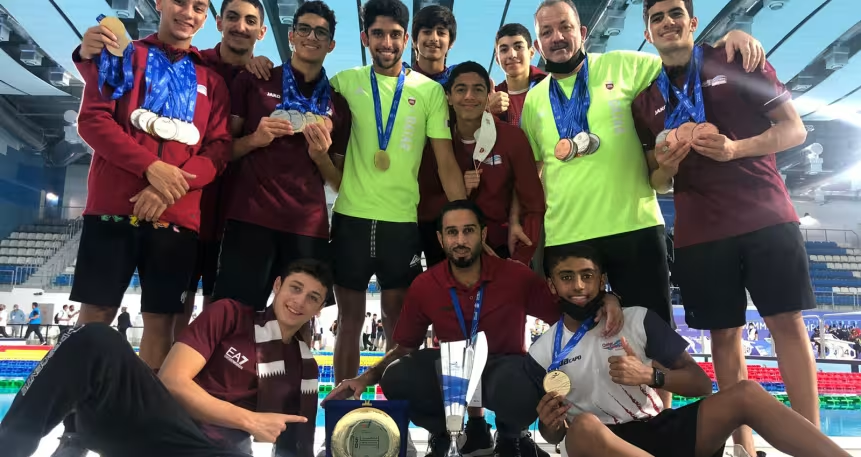
Team Qatar Swimmers shine in Arab Championships
Abu Dhabi: The 2021 Arab Short Course Championships came to an end in Abu Dhabi, United Arab Emirates on Wednesday where team Qatar Swimmers claimed the first place at 16-18 years age group.
The event brought together 174 swimmers from 16 countries.
Team Qatar won 3 gold, one silver and two bronze medals in the final day's competitions, ending their participation in the event with a total of 30 medals.
Abdullah Ahmed clinched the first gold medal on Wednesday in 200m backstroke (14-15 age group), then Mohammed Mahmoud won the second gold medal in 100m backstroke (16-18 age group) while the relay team consisting of Karim Salah, Omar Hassan and Youssef Hassan and Mohamed Mahmoud claimed 3rd gold medal in 4x100m medley (16-18 age group).
President of the Qatar Swimming Association, Khaleel Al Jabir lauded the results achieved by Team Qatar in the first Arab championship for the age groups and confirmed that obtaining 11 gold medals is a real achievement.
