































Overview
Cycling has been a permanent fixture of the Olympic Games since Athens 1896. Its Olympic programme has expanded considerably over the decades and now encompasses four distinct branches: road cycling, track cycling, mountain biking, and BMX.
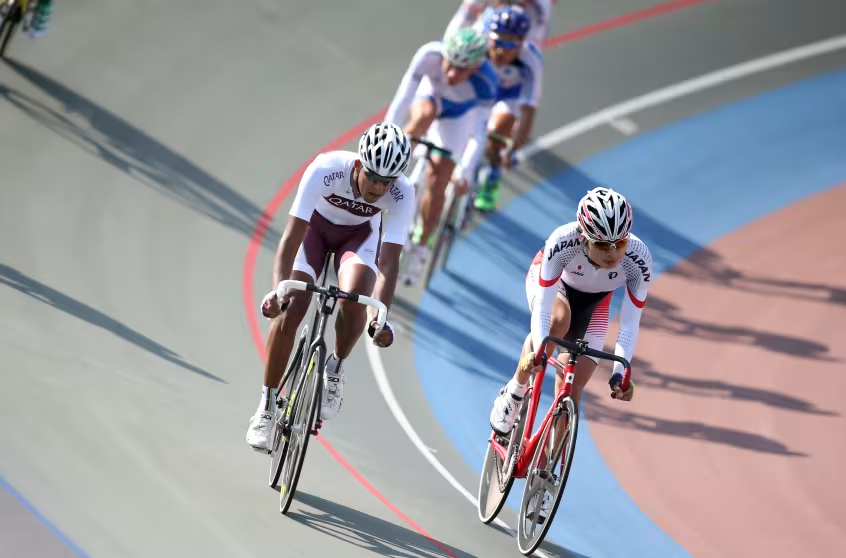
In road events, riders compete in individual road races and time trials for both men and women, covering distances that exceed 250 kilometres in some cases. Track cycling, held in a banked oval velodrome, features more specialised disciplines: sprint, keirin, points race, omnium, and Madison — each testing a mix of explosive power, tactics, and short-range endurance. Mountain biking was added to the programme at Atlanta 1996 in the cross-country event, contested over rough terrain and demanding trails. BMX is divided into BMX racing, included since Beijing 2008, and BMX freestyle, added at Tokyo 2020.
The sport is governed internationally by the UCI (International Cycling Union), founded in 1900. Cycling is among the most diverse sports within a single Olympic programme: the demands of mountain cross-country bear little resemblance to those of a velodrome keirin or the acrobatic style of BMX freestyle. Competitive strength in road and track events is concentrated in Europe, particularly the Netherlands, France, Britain, and Belgium.
Featured News

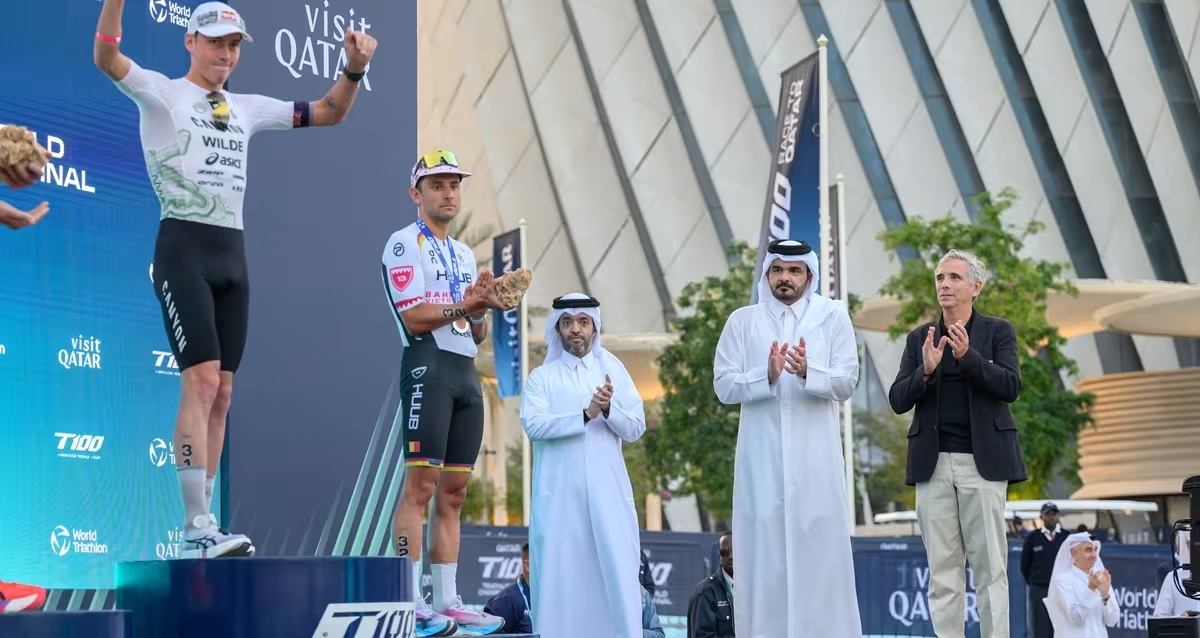
Sheikh Joaan crowns winners of T100 Triathlon World Championship
Doha: H.E. Sheikh Joaan bin Hamad Al Thani, President of the Qatar Olympic Committee, today crowned the winners of the professional races at the T100 Triathlon World Championship, as Doha hosted the final weekend of the series, with the participation of a select group of the world’s top triathlon athletes.In the Men’s Pro T100 race at the final round, New Zealand’s Hayden Wilde claimed first place with a time of 3:06:08, ahead of USA's Morgan Pearson, who finished second in 3:07:23, while Belgium’s Marten Van Riel secured third place with a time of 3:08:14, following a highly competitive race marked by strong performances and intense competition through to the final stages.With this result, Hayden Wilde was crowned champion of the 2025 T100 Triathlon World Championship season, accumulating 195 points, while Germany’s Mika Noodt finished second overall with 150 points, and Belgium’s Jelle Geens secured third place with 149 points.In the Women’s Pro T100 race, Britain’s Kate Waugh claimed first place with a time of 3:31:30, followed by her compatriot Georgia Taylor-Brown, who finished second in 3:31:50, while Switzerland’s Julie Derron secured third place with a time of 3:32:31.In the women’s overall standings, Kate Waugh claimed first place with 183 points to be crowned women’s champion of the season, followed by Julie Derron in second place with 163 points, while Britain’s Lucy Charles-Barclay finished third with 152 points.The medal ceremony was attended by H.E. Mr. Saad bin Ali Al Kharji, Chairman of Qatar Tourism; Mr. Antonio Arimany, President of World Triathlon; and H.E. Engineer Yasser bin Abdullah Al-Jamal, Undersecretary of the Ministry of Sports and Youth.Hosting the final round of the championship in Doha reflects ongoing efforts to further strengthen Qatar’s position as a global sports and tourism destination, in line with the country’s vision of leveraging sport as a driver of development, promoting sports tourism, and showcasing its world-class organizational capabilities.

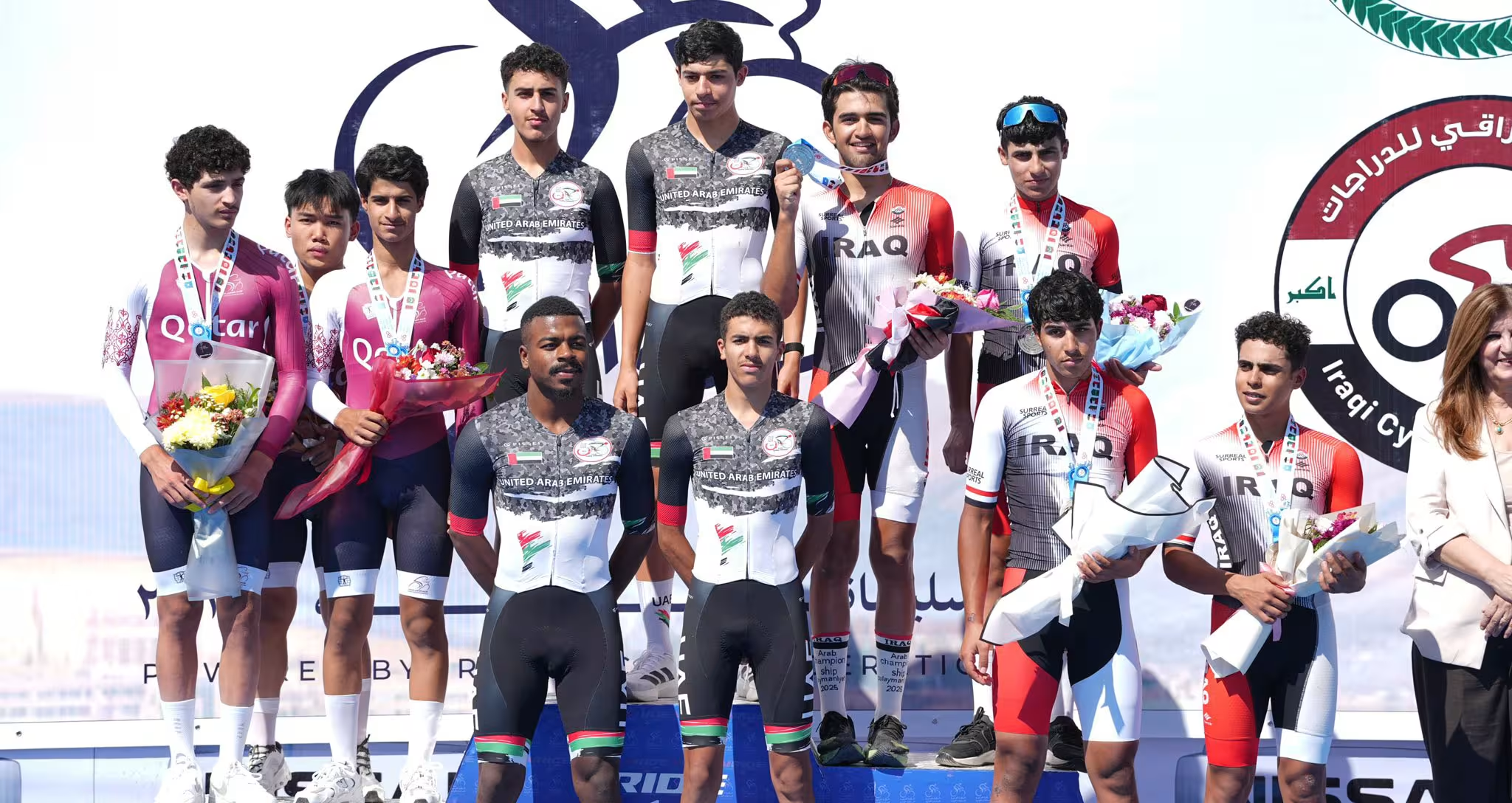
Team Qatar win time trial bronze at Arab Cycling Championship
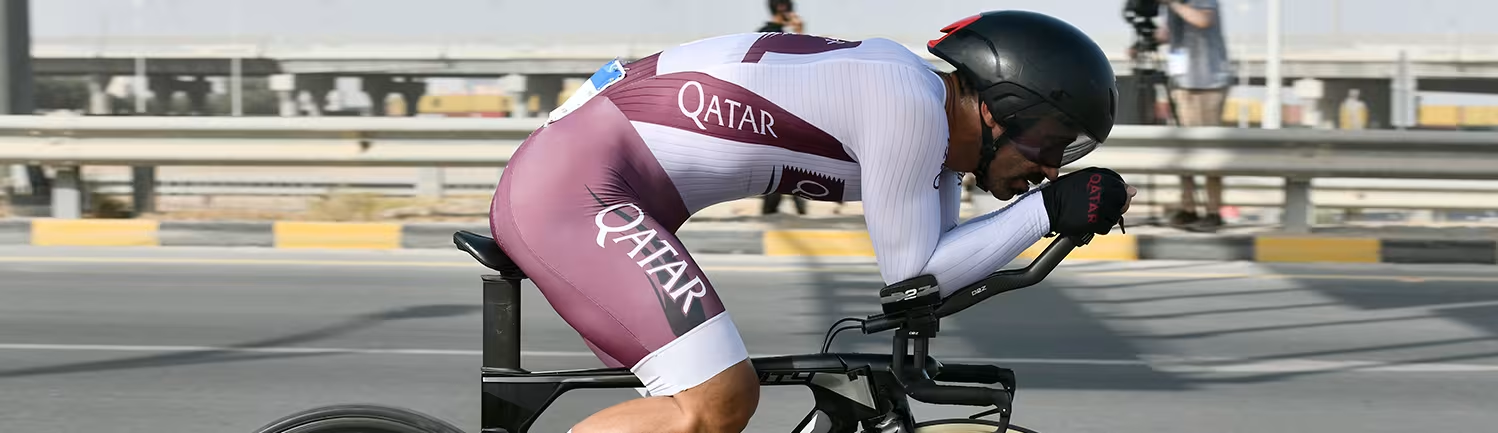
Sulaimaniyah: Team Qatar’s cycling squad claimed the bronze medal in the 48 km time trial at the Arab Cycling Championship, currently taking place in the Iraqi city of Sulaimaniyah with the participation of nine Arab national teams.The Qatari team delivered a strong performance throughout the race, finishing third in a highly competitive field. The UAE team secured the gold medal, while Iraq took the silver.The medal ceremony was attended by Dr. Yasser Omar Al-Doukhi, President of the Arab Cycling Federation, who presented the medals to the winners.The Arab Cycling Championship will continue in Sulaimaniyah until October 13, featuring various road and track events for men and women across different categories.
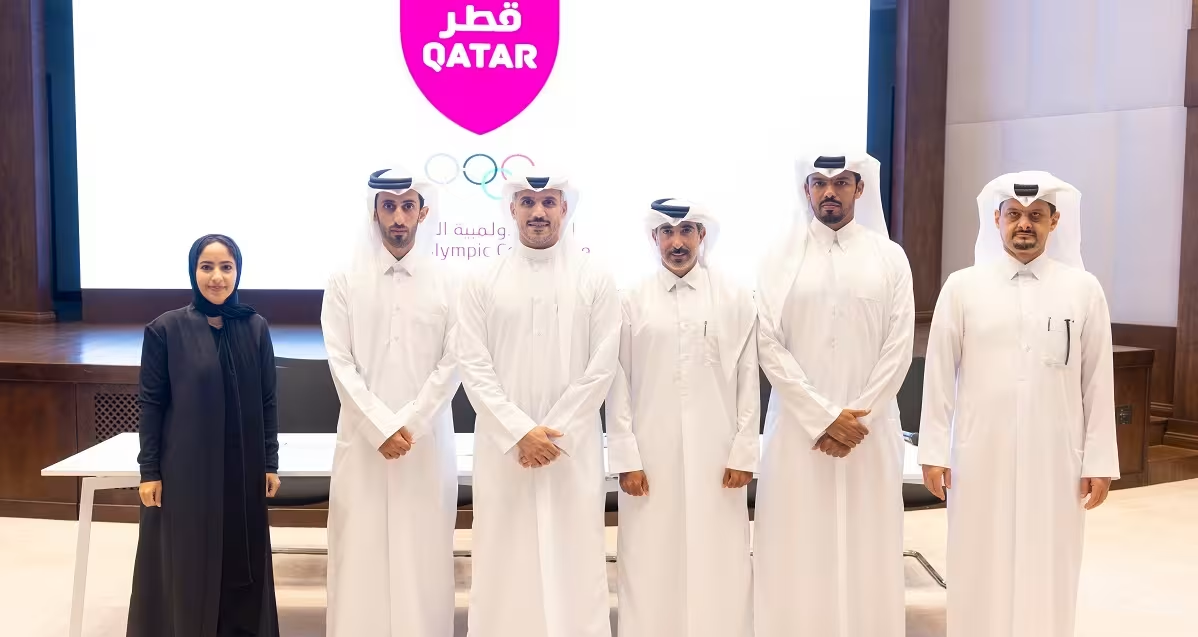
Abdulaziz Al-Tamimi elected President of the Qatar Cycling and Triathlon Federation
Doha: The General Assembly of the Qatar Cycling and Triathlon Federation (QCTF) has elected Abdulaziz Saud Al-Tamimi as President of the QCTF for the 2024-2028 term. During the meeting, which was held today at the Qatar Olympic Committee headquarters, Abdullah Shaheen Al-Kaabi, Ahmed Hamad Al-Benali, Abdullah Mohammed Al-Menhali and Fatima Essa Ghanim were elected as members of the Federations Board of Directors. The Assembly agenda included the approval of the previous meeting's minutes and the endorsement of last year's financial statements.
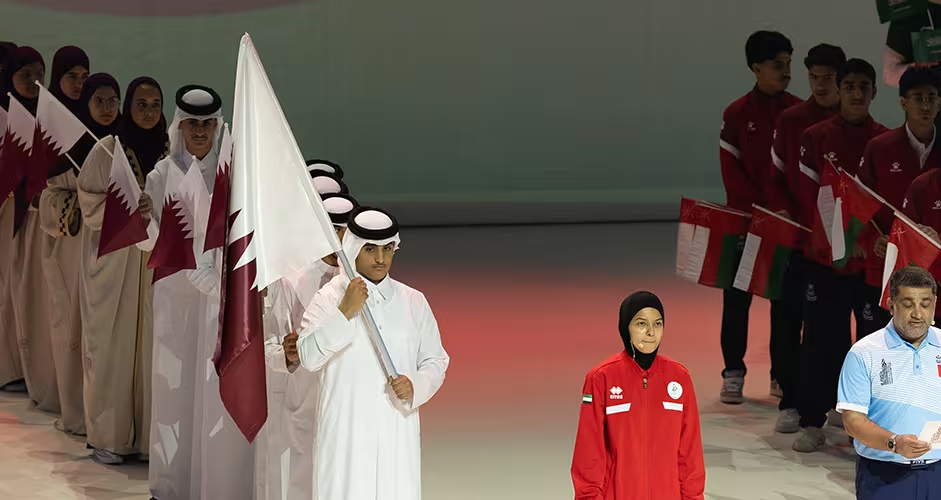
Opening Ceremony of Youth GCC Games Takes Place
Dubai: The official opening ceremony of the 1st Youth GCC Games UAE 2024 was held on Tuesday evening at the Dubai Opera. Held until May 2 under the theme, "Our Gulf is One... Our Youth are Promising", the inaugural Youth GCC Games features the participation of 3,500 athletes competing in 24 sports. The opening ceremony was attended by the QOC Second Vice President H.E. Dr. Thani bin Abdulrahman Al Kuwari and the QOC Secretary General H.E. Jassim bin Rashid Al Buenain, in addition to the Qatari delegation participating in the GCC Youth Games UAE 2024. Team Qatar Rider Sheikh Mohamed bin Jassim al-Thani carried the Qatari flag during the opening ceremony. Qatar’s showjumping contingent includes riders Sheikh Mohamed bin Jassim al-Thani, Khalifa Abdullah al-Khalidi, Sultan Salem al-Nuaimi, Ghanem Nasser al-Qadi and Saad Ahmed al-Saad.