


































Overview
Handball is a team sport of European origin, established in its modern form in the Scandinavian countries and Germany in the 1920s. It first appeared at the Olympics at Berlin 1936 in its outdoor field format, before disappearing and returning in its current indoor format at Munich 1972 for men, and Montreal 1976 for women.
Handball is played between two teams of seven players each — six outfield players and a goalkeeper — on a court measuring 40×20 metres. Matches consist of two 30-minute halves, with each team aiming to score the most goals by passing the ball into the opponent's net using only their hands and bouncing it off the ground, without using the feet. The sport combines fast tempo, regulated physical contact, and complex collective tactics, making it among the fastest team sports at the Olympic Games.
The sport is governed internationally by the International Handball Federation (IHF), founded in 1946. Twelve teams compete in each of the men's and women's tournaments, divided into a group stage followed by knockout rounds through to the final. Competitive strength is concentrated in Europe — particularly Denmark, France, Norway, Germany, and Sweden — which have claimed most Olympic gold medals since the 1980s.
Featured News

Team Qatar Secures Asian Games Handball Silver
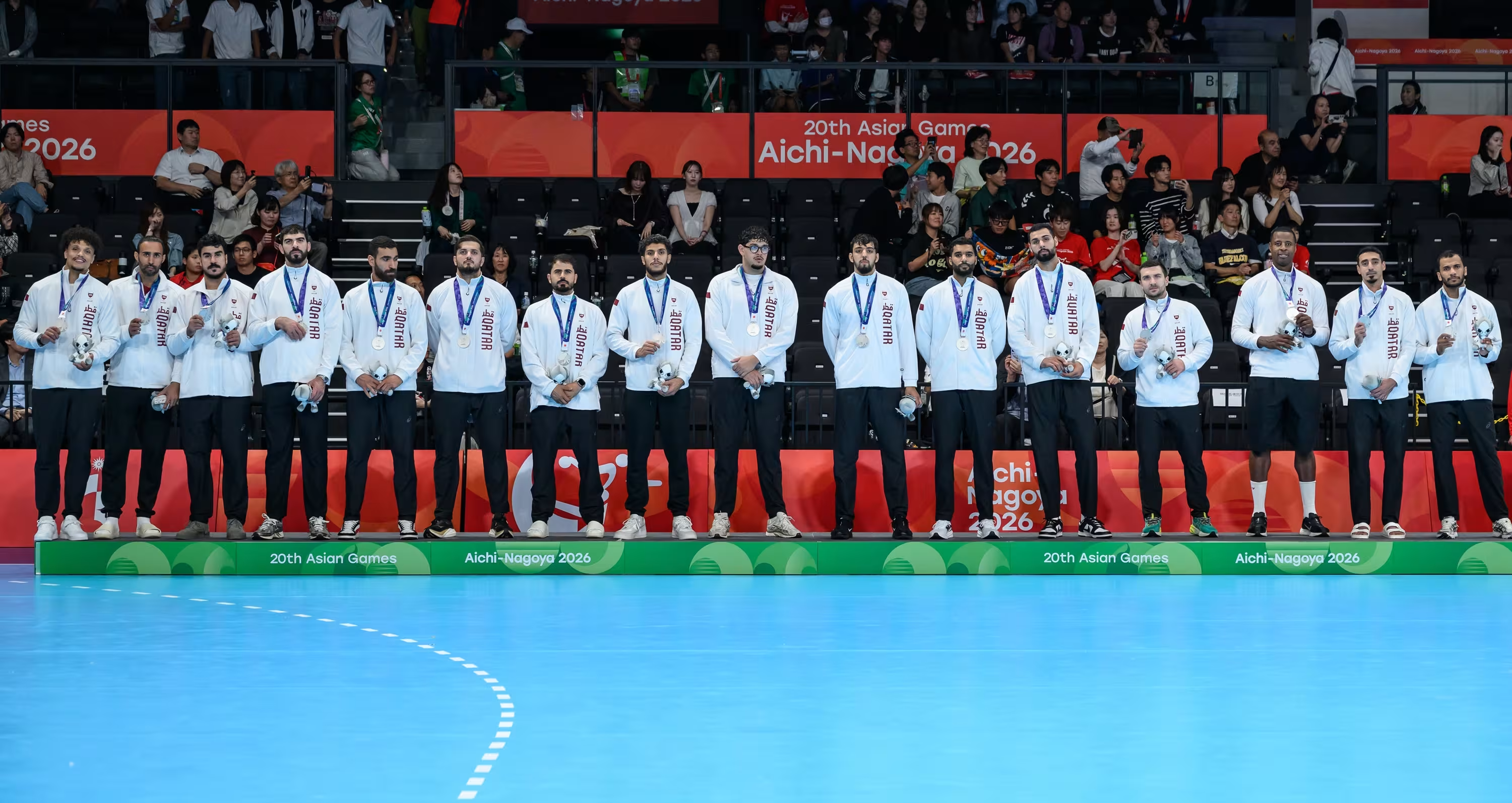
NAGOYA, Japan – Qatar’s national handball team claimed the silver medal at the 20th Asian Games, Aichi-Nagoya 2026, after suffering a narrow 33-32 defeat to Bahrain in the final of the men’s handball competition on Tuesday.The result saw Bahrain capture the Asian Games handball gold medal for the first time, while Qatar settled for silver after winning the title at the previous three editions , Incheon 2014, Jakarta 2018 and Hangzhou 2022.The final was a fiercely contested and thrilling encounter from start to finish, with Bahrain eventually prevailing by a single goal after capitalizing on a number of unforced errors by the Qatari players that proved costly.

Team Qatar Beat South Korea to Reach Handball Final Aichi-Nagoya
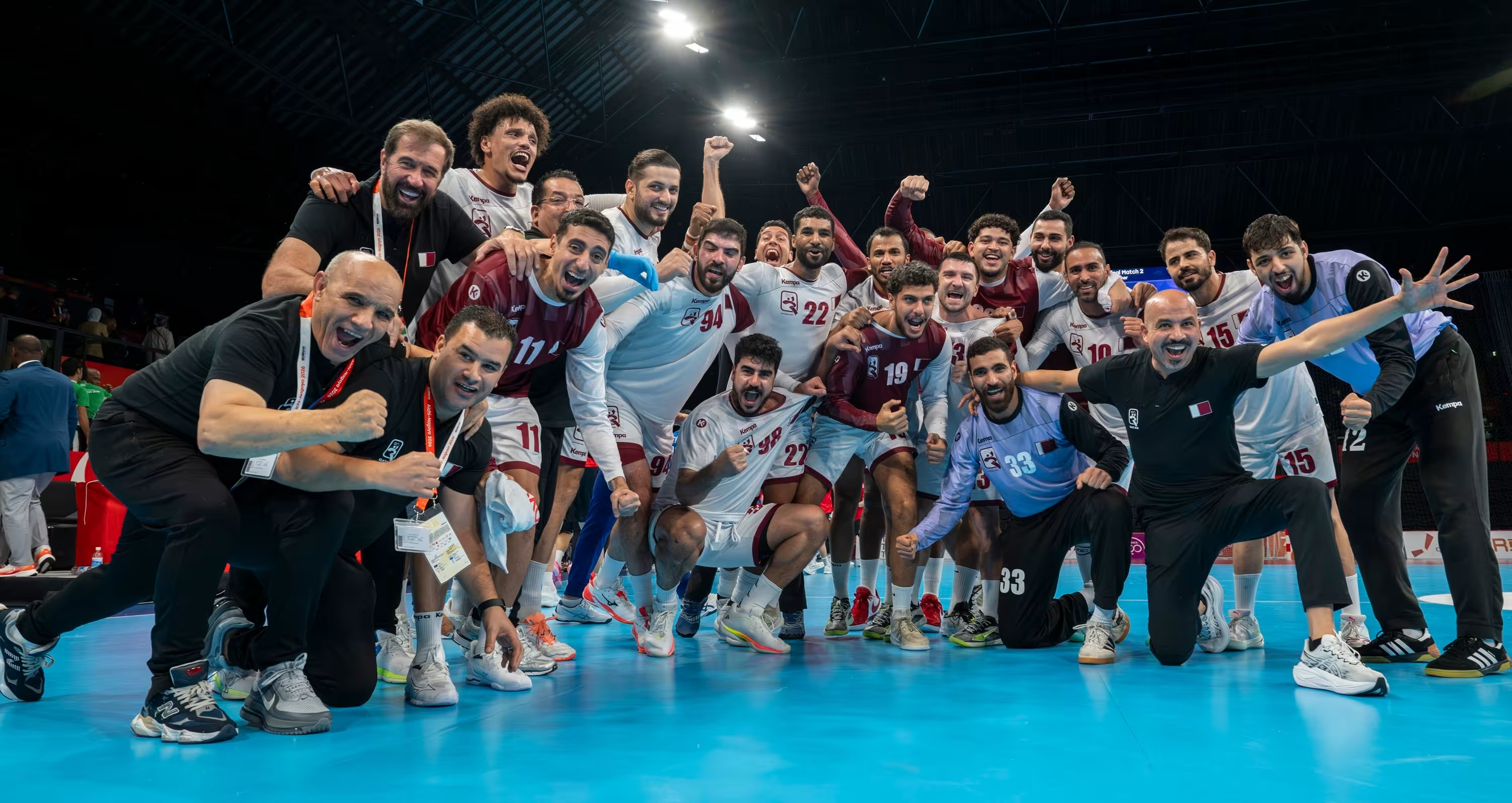
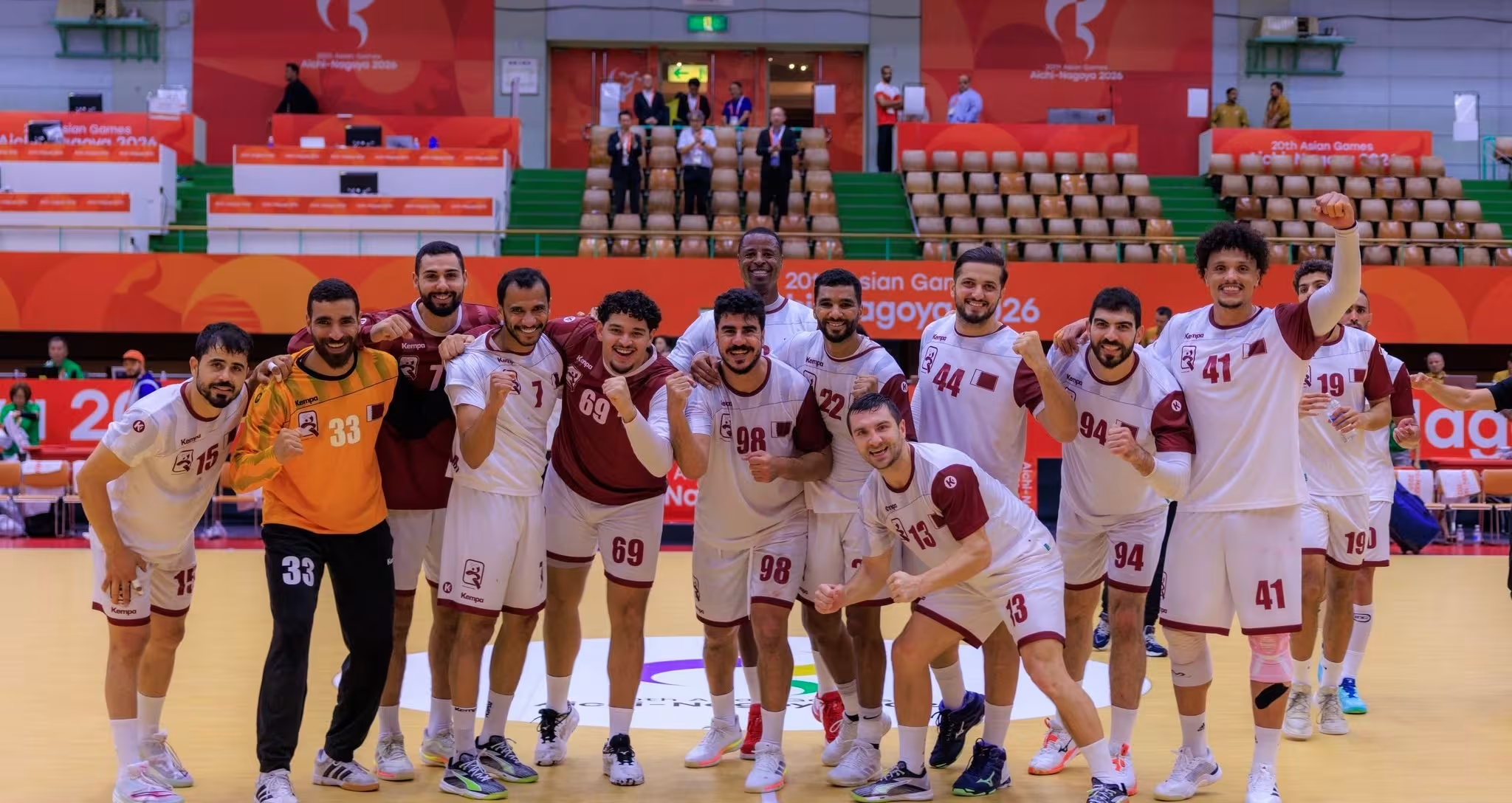
Aichi-Nagoya - Qatar’s men’s handball team qualified for the final of the 20th Asian Games Aichi-Nagoya 2026 after defeating South Korea 32-30 in yesterday’s semi-final.Qatar will face Bahrain in today’s final after Bahrain defeated Japan 35-31 in the other semi-final. Team Qatar will be looking to retain the gold medal they have won at each of the previous three editions of the Asian Games.The semi-final was a closely contested and exciting encounter. South Korea made the stronger start and took a 2-0 lead before Qatar responded and reduced the deficit to one goal at 5-4. The match remained evenly balanced, with both sides exchanging goals.
Team Qatar Set to Face South Korea in Asian Games Handball Semi-Final
Aichi-Nagoya - Qatar’s national handball team face South Korea today in the semi-finals of the 20th Asian Games – Aichi-Nagoya 2026, looking to continue their successful campaign, secure a place in the final and move one step closer to retaining their Asian Games title. Team Qatar head into the match in high spirits following a string of positive results since the start of the competition. They topped Group A with a perfect six points after three consecutive victories, opening their campaign with a 40–17 win over Hong Kong before defeating China 30–25 and concluding the group stage with a 37–28 victory over Japan. Qatar continued their impressive run in the knockout stage with a 31–25 quarter-final victory over Iran. In a hard-fought encounter, Team Qatar overturned a 14–13 half-time deficit and took control in the second half to secure a six-goal victory and book their place in the semi-finals.Team Qatar will be looking to maintain their strong form against South Korea, who secured their semi-final place after overcoming China in the quarter-finals, with a highly competitive encounter expected as both teams battle for a place in the final. The other semi-final will see hosts Japan face Bahrain.Japan advanced after defeating Kuwait 37–32 in the quarter-finals, while Bahrain booked their place in the last four with a 37–16 victory over Hong Kong. The winners of the two semi-finals will meet in Tuesday’s final. Qatar have high ambitions at this edition of the Asian Games as they seek to retain the gold medal they won at the previous three editions , Incheon 2014, Jakarta 2018 and Hangzhou 2022.
Team Qatar advance to Handball Semi-Finals with Victory over Iran
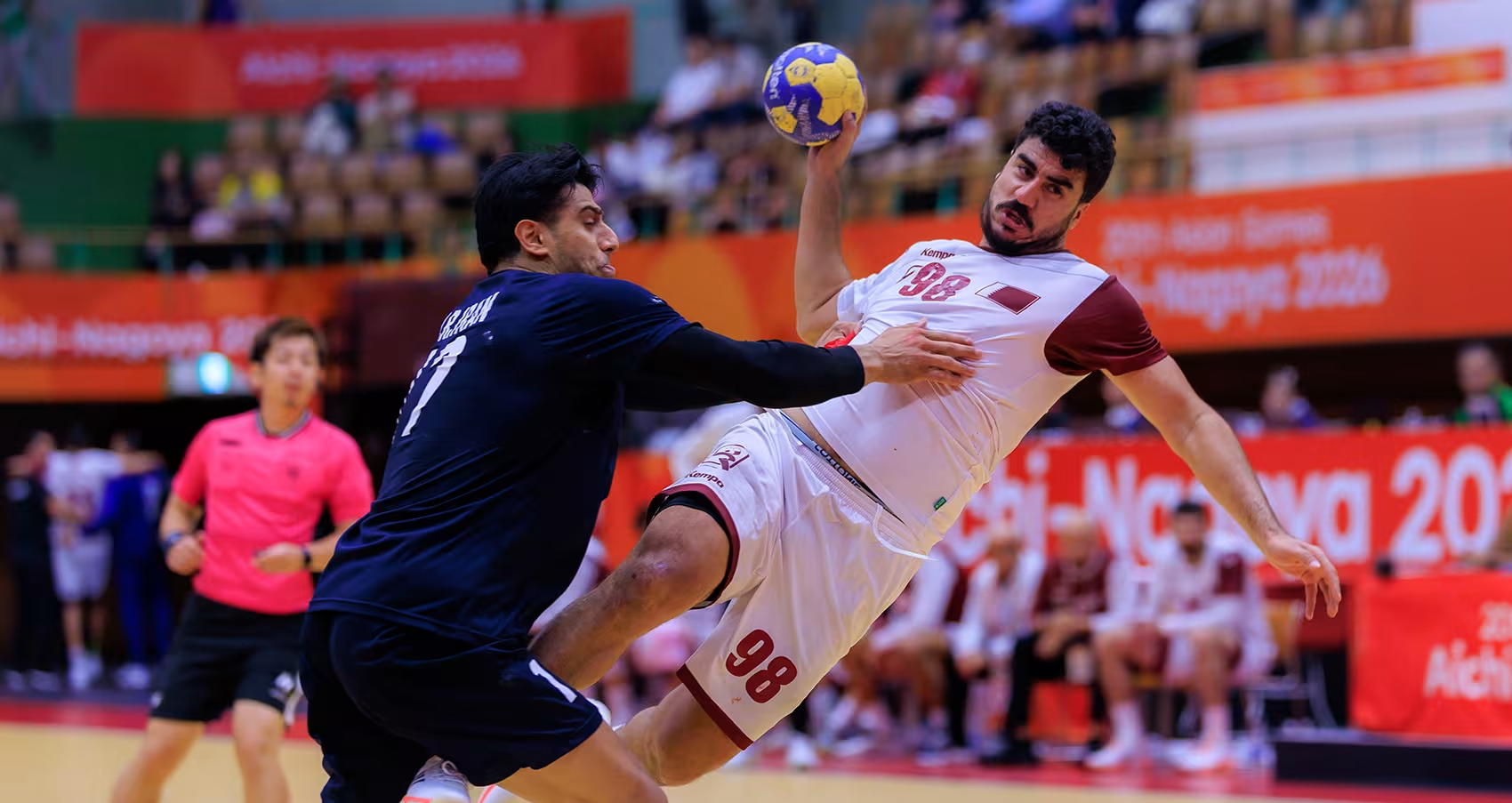
Aichi-Nagoya - Qatar’s national handball team qualified for the semi-finals of the Aichi-Nagoya 2026 Asian Games after defeating Iran 31–25 in yesterday’s quarter-final.Team Qatar will face South Korea in the semi-finals after the Koreans advanced at the expense of China. The match was attended by H.E. Jassim bin Rashid Al Buenain, Secretary General of the Qatar Olympic Committee, and Sheikh Khalifa bin Khalid Al Thani, Director of the Sports Sector at the Qatar Olympic Committee.The encounter against Iran was far from easy for Qatar, particularly in the first half, which ended with Iran leading 14–13. Team Qatar, however, overturned the deficit in the second half to secure victory.The opening stages were evenly contested before Iran established the first two-goal advantage in the 13th minute, taking a 6–4 lead after Qatar missed several attacking opportunities. Team Qatar regained their composure and reduced the deficit to one at 7–6, but Iran responded by extending their advantage to 9–6.