
































Overview
Rowing has been part of the Olympic Games since Paris 1900, after sea conditions prevented the planned races at Athens 1896 from being held. Women's rowing was officially added at Montreal 1976. All races are contested over a 2,000-metre straight course on still water, with boats launching simultaneously from start to finish.
Rowing events fall into two categories based on how athletes handle their oars. In sculling, each rower holds two oars — one in each hand — with boats including the single, double, and quadruple sculls. In sweep rowing, each athlete uses a single oar held with both hands; the events include the coxless pair and four, plus the eight with coxswain — the most famous and fastest event in the sport. All disciplines are contested in both men's and women's categories.
What makes rowing a unique test is the combination of sustained maximum-intensity effort over six to seven minutes with the technical precision required in blade work, boat balance, and crew synchronisation. It is among the most aerobically demanding sports on the entire Olympic programme. Lightweight categories were removed from the programme after Tokyo 2020 to streamline the schedule.
Featured News

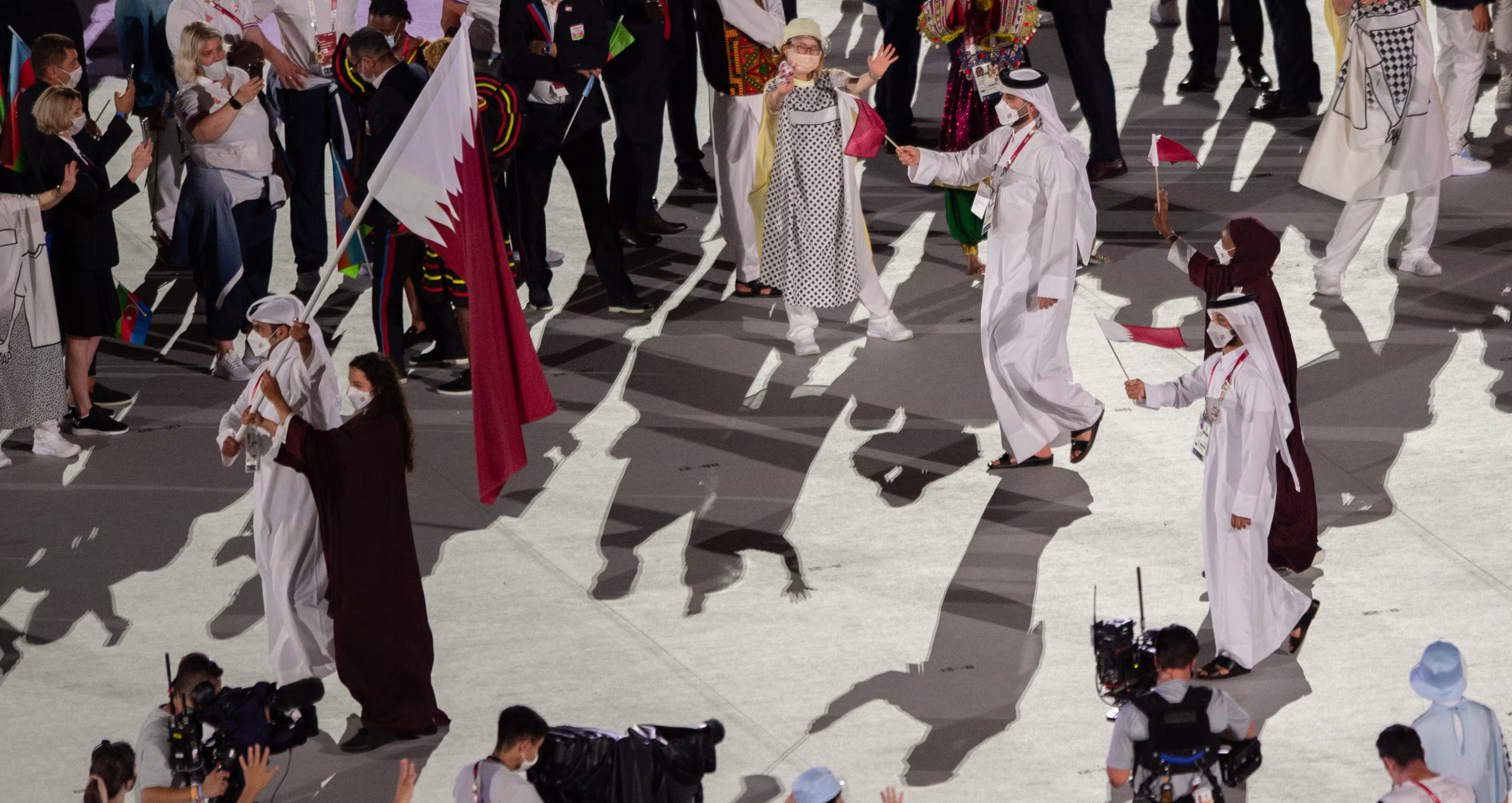
Tokyo 2020 Olympics get underway
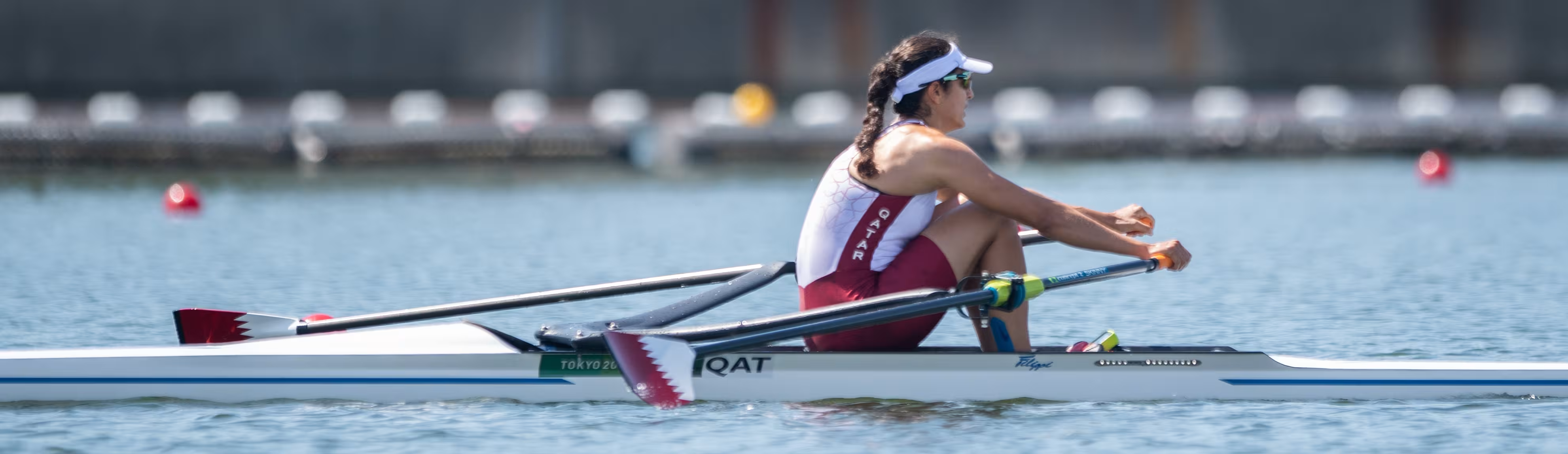
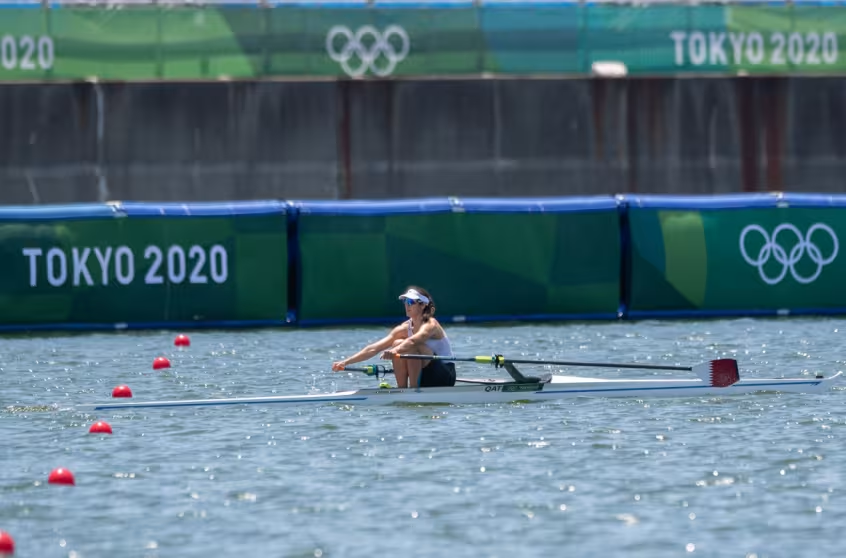
Tokyo-The opening ceremony of Tokyo 2020 Olympic Games took place at Olympic Stadium on July 23, 2021. The opening ceremony was attended by Japan's Emperor Naruhito who announced the games open. In attendance also were H.E President of the Qatar Olympic Committee Sheikh Joaan bin Hamad Al Thani, President of the International Olympic Committee Thomas Bach and Secretary General of the Qatar Olympic Committee Jassim bin Rashid Al Buenain. Four-time major tennis champion Naomi Osaka had the honour of lighting the Tokyo2020 Olympic cauldron. Mohammed Al Rumaihi and Tala Abujbara carried Qatar's national flag at the opening ceremony. Earlier yesterday, Tala Abujbara finished fifth in heat number 5 of the women’s singles sculls rowing competition on the opening day of the Tokyo Olympic Games. Tala, who was in lane number three, failed to match the pace set by others and finished outside the top three in a time of 8min 6.29sec. The winning time in the heats at the Sea Forest Waterway was 7:37.91 by Austria’s Magdalena Lobnig. Canada’s Carling Zeeman (7:40.72) and Namibia’s Maike Diekmann (7:56.37) followed in that order. The top three qualified for the quarterfinal. Tala still has a chance to make the last eight needing to place in the top two in the repechage race on Saturday. Her race is scheduled for 8.30am (2.30 am Doha time). The Qatari rower was excited to take part in her first Olympics. “It feels amazing. When I woke up this morning, I was really excited, more excited than nervous. I raced at the Olympics. It’s been a dream of mine for many years now. I’ve nothing but positive energy today,” she said. Qatar's Judoka Ayoub El Idriss will begin his campaign in Men's 66 event on Sunday while Abdulaziz Al Obaidly will participate in Men's 200m breaststroke swimming event on Tuesday. The official training sessions of men's trap event will begin on Monday. Qatar's Mohamed Al Rumaihi will begin his campaign at Tokyo Olympics on July 28. Men's beach volleyball competitions will get underway on Sunday. In their opening match, Qatar's Cherif Younousse and Ahmed Tijan will take Adrian Heidrich and Mirco Gerson of Switzerland at the Shiokaze Park.

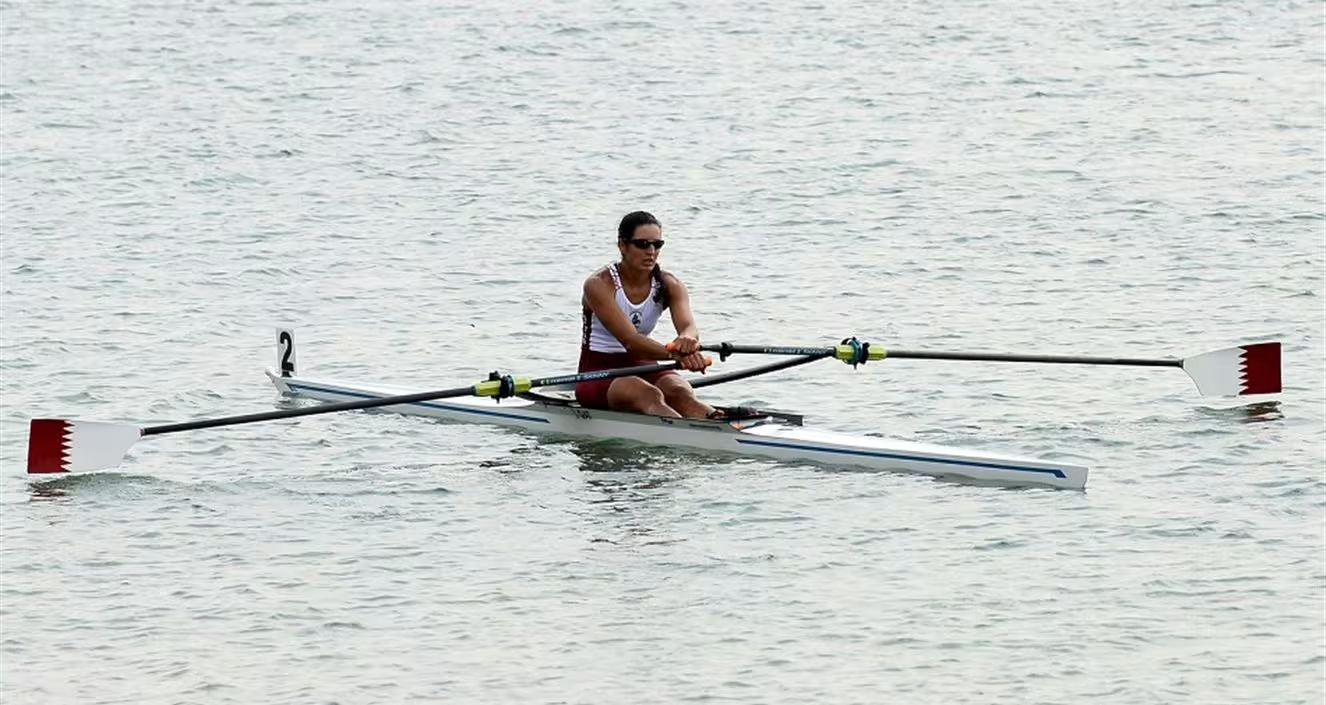
Qatari Rowing Athlete Tala Abujbara Qualifies to Tokyo Olympics
KUWAIT - Tala Abujbara, Athlete of the Qatari rowing team, has qualified for the upcoming Tokyo 2020 Olympic Games.Tala's qualification came through her participation in the Asia and Oceania Rowing Championship qualifying for the Olympiad in Kuwait, and Tala achieved a time of 8.20 minutes in the 2000-meter race.Tala previously won the gold medal for the second Arab Championship in Indoor Rowing "Argometer", which was hosted by the State of Kuwait in 2018.