

































Overview
Table tennis emerged in Victorian England in the 1880s as a parlour game played in upper-class drawing rooms after dinner, before evolving into an organised competitive sport. The International Table Tennis Federation (ITTF) was founded in 1926, and the game entered the Olympic programme at Seoul 1988.
Players compete on a table measuring 2.74×1.525 metres, divided by a 15.25cm-high net, using lightweight rubber-covered paddles capable of generating topspin, backspin, and sidespin at remarkable speeds. Matches are played to the best of seven games, with each game won by the first player to reach 11 points, with a two-point margin required.
The Olympic programme today includes five events: men's singles, women's singles, men's team, women's team, and mixed doubles, the latter added at Tokyo 2020. China's long-standing dominance of the sport's Olympic gold medals since 1988 stands as one of its defining features, with strong competition from Japan, South Korea, Germany, and Sweden. The ITTF continually updates its rules and equipment to maintain pace and audience appeal, including the 2015 switch from 38mm celluloid balls to 40mm plastic balls.
Featured News

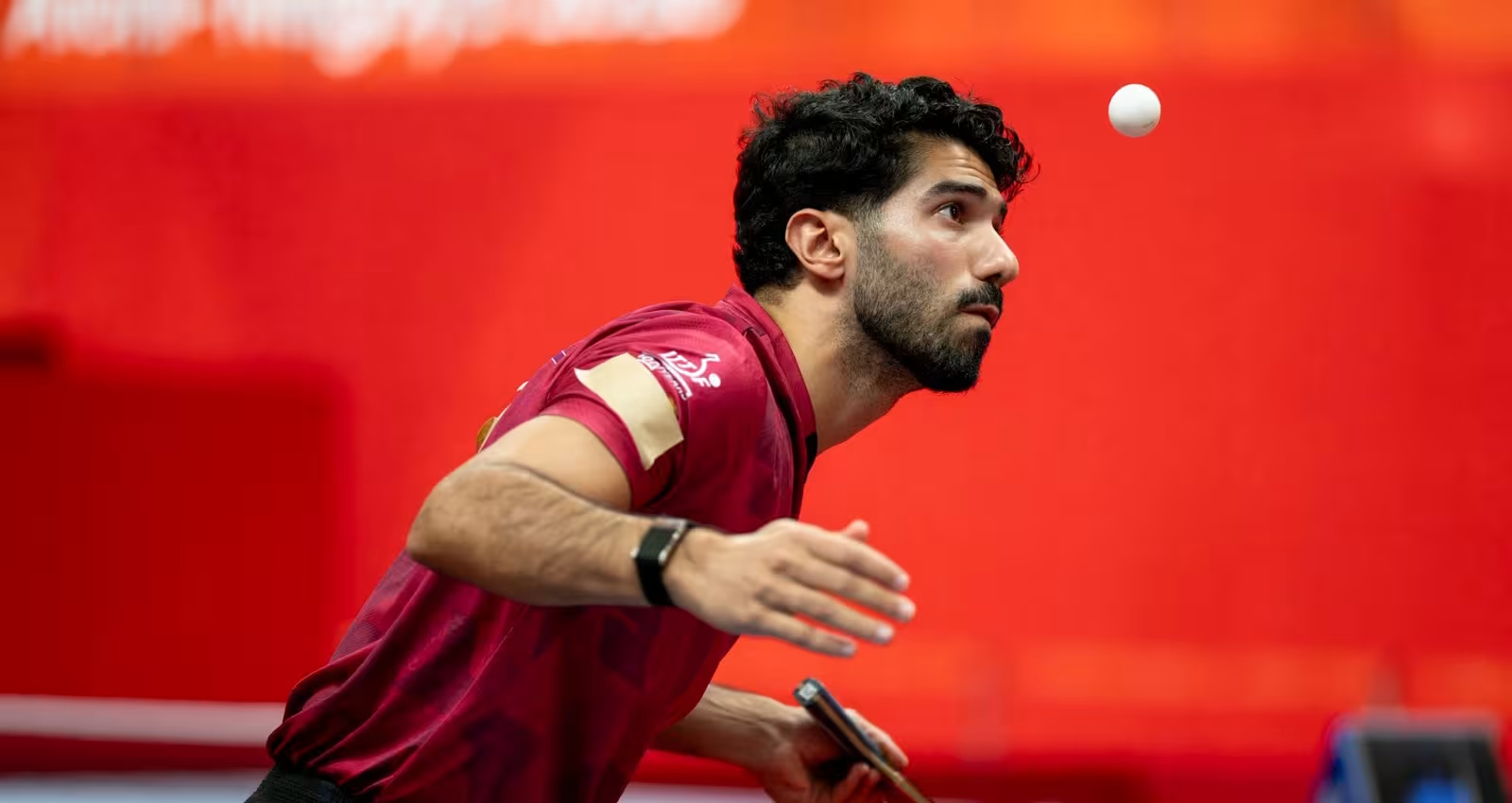
Abdulwahab Brothers Advance to Second Round at Asian Games
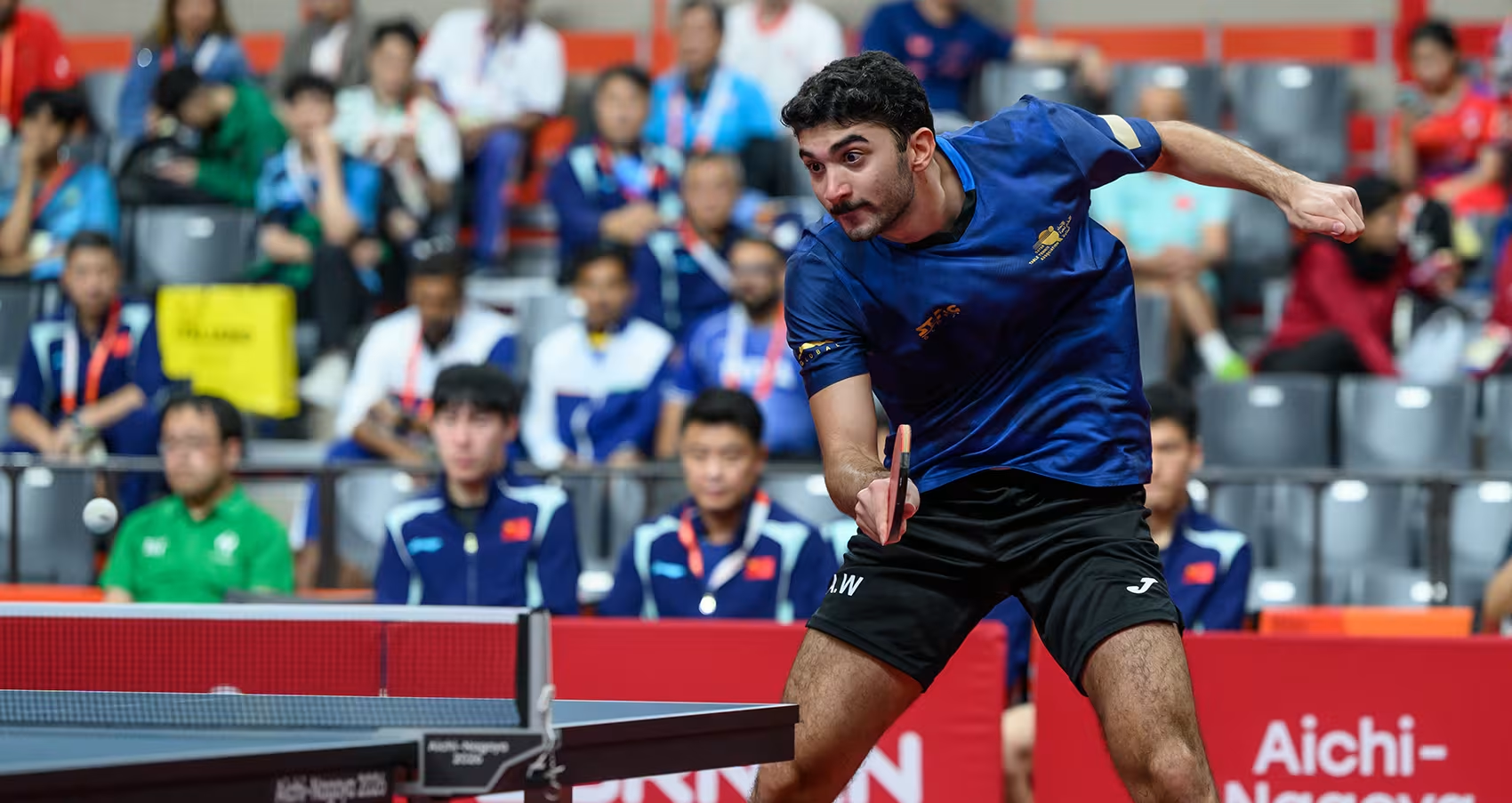
Aichi-Nagoya, Japan-Team Qatar’s Mohammed Abdulwahab and Abdulla Abdulwahab advanced to the second round of the men’s singles table tennis competition at the 20th Asian Games – Aichi-Nagoya 2026 after securing convincing victories in their opening-round matches.Mohammed Abdulwahab recorded a comprehensive 4–0 victory over Indonesia’s Junendra Mohammed, winning 11–2, 11–7, 11–6 and 11–9. He will face Japan’s Tomokazu Harimoto in the second round today.Abdulla Abdulwahab also produced a strong performance, defeating Laos’ Phongsa Anani 4–1. He won the first three games 11–2, 11–6 and 11–8 before dropping the fourth 10–12, then sealed the match with an 11–5 victory in the fifth game. He will meet Singapore’s Quek Yong in the second round today.The swimming competition at the 20th Asian Games – Aichi-Nagoya 2026 concludes today, with Team Qatar swimmers set to compete in the 50m breaststroke, 200m backstroke, 400m freestyle and 200m butterfly.

Qatar Advance to Round of 16 with Victory over Macao
AICHI-NAGOYA – Qatar’s men’s table tennis team advanced to the Round of 16 in the team competition at the Aichi-Nagoya 2026 Asian Games after edging Macao 3-2 in their Group A encounter on Wednesday.Qatar fielded Abdullah Abdulhussain, Rawad Akram Al Nasser, Mohammed Abdulhussain, Sultan Khalid Al Kuwari and Ahmed Eid Qarni in the competition.The Qatari team will return to action today at Sky Hall Toyota for their Round of 16 clash, aiming to maintain their momentum and secure further progress in the continental showpiece.In the women’s team competition, Qatar were beaten 3-0 by Hong Kong in their Group E encounter.
Qatar Junior Open Squash Championship Gets Underway Tuesday
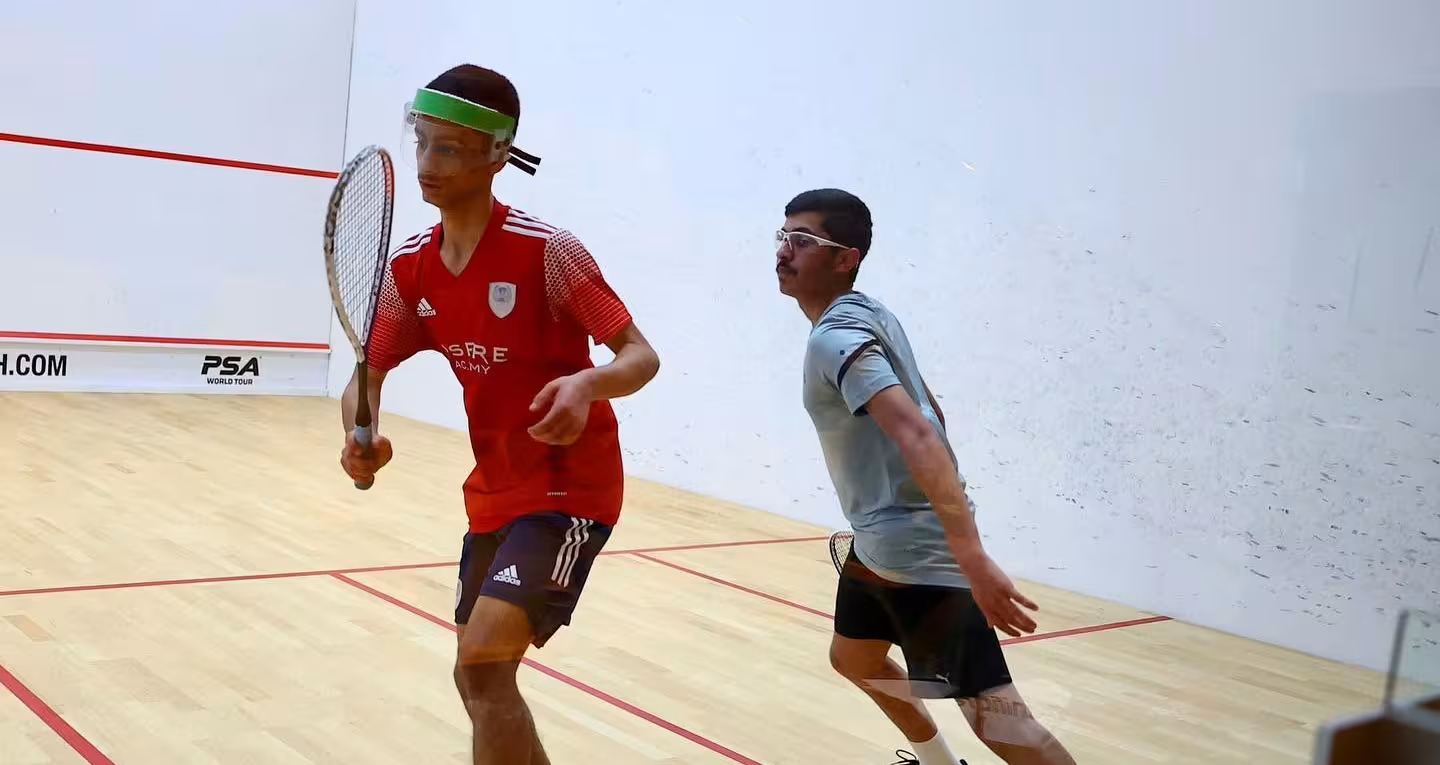
Doha: The 2026 Qatar Junior Open Squash Championship will get underway on Tuesday at the Khalifa International Tennis and Squash Complex, bringing together promising young players from Qatar and several other countries.Organized by the Qatar Squash Federation under the umbrella of the Asian Squash Federation, the three-day championship will feature competitions across four age categories: Under-11, Under-13, Under-15 and Under-17.Championship Director Saad Al Muhannadi said the tournament forms part of the Qatar Squash Federation’s efforts to develop young Qatari players by providing them with greater competitive experience.“We are keen to give our players as much competitive exposure as possible, as their development requires regular match play and the opportunity to compete against opponents of different levels and playing styles,” Al Muhannadi said.He added that the Federation’s objectives extend beyond achieving results in a single tournament, with the focus on developing a new generation of players capable of progressing, competing at a high level and representing Qatar in future events.Al Muhannadi also highlighted the championship’s role in supporting the growth of squash and expanding the sport’s participation base in Qatar.

Qatar paddlers bag 20 medals at West Asian TT in Amman
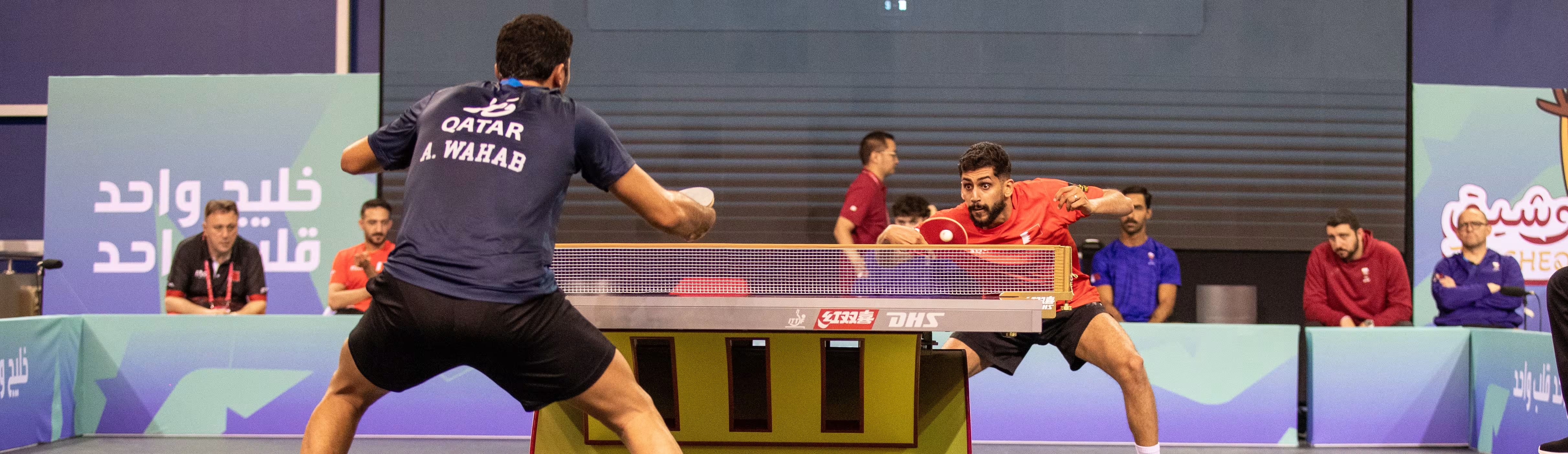
Doha: Qatar claimed as many as 20 medals, including four gold, two silver and 14 bronze, at the West Asian Table Tennis Championships in Amman, Jordan.Hosted by the Jordanian Table Tennis Federation at the Sports Palace in Al Hussein Youth City, Amman, the eight-day tournament saw wide participation from players of Jordan, Kuwait, Qatar, Saudi Arabia, Lebanon, Palestine, Oman, Iraq, Bahrain and the UAE.Abdulaziz Nasser Abdullah, Mohammed Abdulwahab and Abdullah Abdulwahab, Ahmed Al Qarni and Rawad Al Nasser, and the under-19 men’s team secured Qatar’s gold medals across singles, doubles and team events.Sultan Al Kuwari and the under-13 girls’ doubles pair of Serena Sheikh and Dana Al Kaabi won silver.Qatar also claimed 14 bronze medals across singles, doubles and team events.The results reflected the strong performances of the national teams across all age categories.Qatar Table Tennis Federation President Hamad Ahmed Al Hammadi praised the players for their performances and competitive spirit, saying the medal haul reflected the federation’s efforts to develop the sport and nurture young talent.“We are proud of what our players achieved at this championship not only because of the number of medals we won but also because of the high technical and competitive levels they demonstrated.“Their excellent spirit and keenness to represent Qatar in the best possible way, raised the Qatari flag high at this sporting event,” he said.