


































Overview
Volleyball was invented by William G. Morgan in 1895 in Holyoke, Massachusetts, as a less physically demanding alternative to basketball. He originally named the new game "Mintonette" before observers noted its volleying nature and the sport was renamed volleyball. It made its way to the Olympic Games at Tokyo 1964 for both men and women, and has remained a fixture ever since.
Indoor volleyball is contested between two teams of six players separated by a net, with each team allowed up to three touches of the ball before returning it. A defensive specialist known as the libero plays alongside the team, wearing a different-coloured jersey and subject to special substitution rules. Matches are played to the best of five sets: the first four to 25 points and a deciding fifth to 15, always requiring a two-point margin of victory.
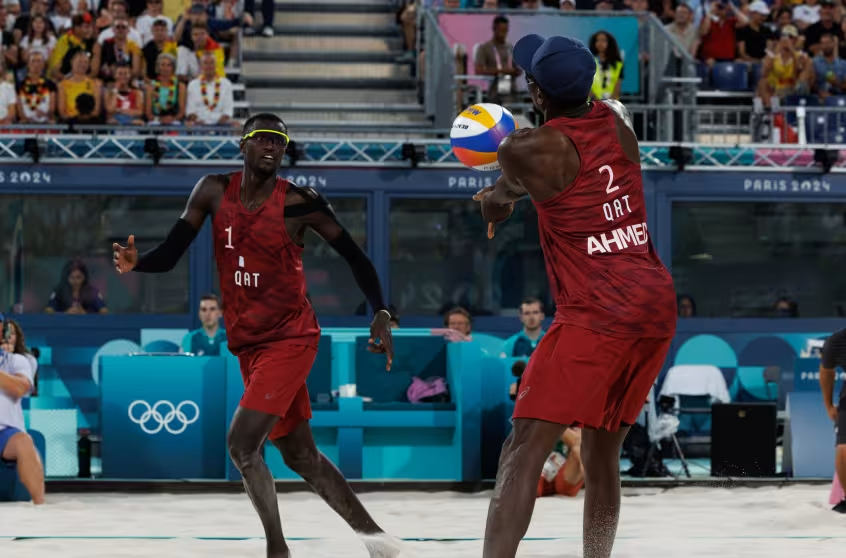
Beach volleyball was added to the Olympic programme at Atlanta 1996 and quickly became one of the most televised events of the Summer Games. Played outdoors on sand between teams of two — with no substitutions and no libero — beach volleyball strips the game to its essentials: serve, pass, set, attack, and defence, with each player required to be effective in every role. The sport is governed by the FIVB, founded in 1947, which has developed both formats over the decades to keep them among the world's most widely played team sports.
Featured News

Strong Start to Third Leg of West Asia Beach Volleyball Tour
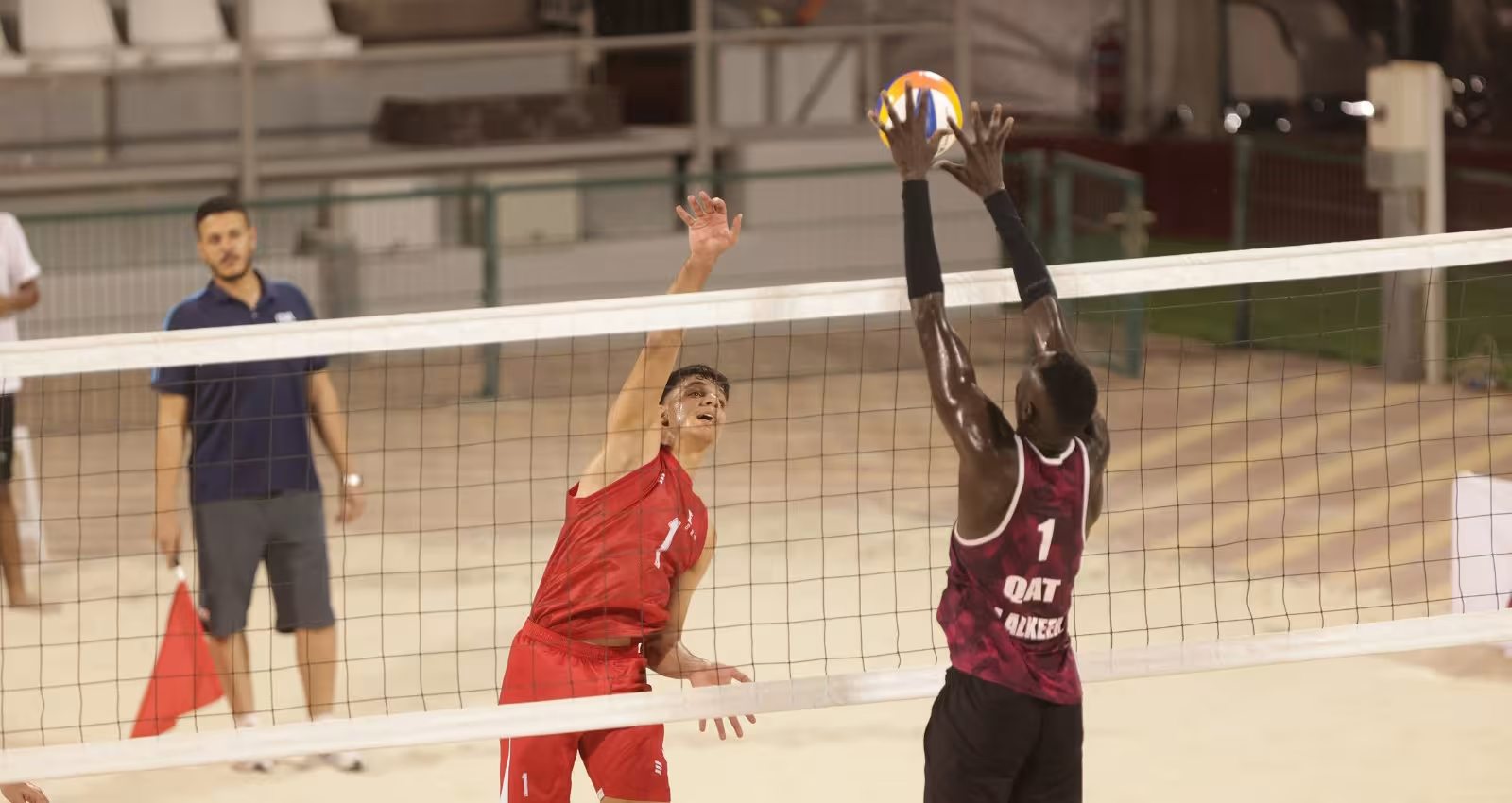
DOHA, Qatar - The third leg of the 2026 West Asia Beach Volleyball Tour for men and women got off to a strong start on Sunday, with Qatar hosting the competition from October 5 to 8 at Al Gharafa Beach Courts.The tournament features 15 teams representing five countries — Qatar, Saudi Arabia, Bahrain, Kuwait and Lebanon — in a highly competitive field.In the men’s competition, Qatar 2, represented by Saif Al Deen Al Majeed and Mahmoud Essam, opened their campaign with a commanding 2-0 victory over Saudi Arabia’s Wafi Al Jasser and Ali Al Awami, winning 21-11, 21-15.In the same group, top-seeded Lebanon 1, represented by Hadi Al Shabib and Jad Abi Karam, also secured a 2-0 victory over Saudi Arabia’s Wafi Al Jasser and Ali Al Awami, prevailing 21-8, 21-17.In Group A, Bahrain 1, featuring Khalid Abdullah and Ali Yaqoub, defeated Qatar 1, represented by Mousa Al Khair and Mohammed Ehab, 2-1.Bahrain 1 continued their winning run with a 2-0 victory over Kuwait’s Barak Khasrouh and Ibrahim Ahmed, winning 21-11, 21-10.In the women’s competition, Lebanon 1, represented by Mervat Hamza and Nour Hamza, defeated Kuwait’s Alaa Al Bahouh and Halima Rashid 2-0, winning both sets 21-12, in Group A.In Group B, Lebanon 2, represented by Mirna Sheikho and Lara Al Nahi, defeated Qatar 4’s Aisha Al Alawi and Nelly Amr 2-0, winning 21-10, 21-5.Also in Group B, Bahrain’s Munira Suleiman and Fatima Al Bouzaid defeated Qatar 3’s Malak Hashem and Shaghaf Ismail 2-1, winning 16-21, 21-14, 18-16.In Group A, Qatar 1, represented by Haya Abu Issa and Laila Mohammed, defeated fellow Qatari pair Lamis Al Salman and Dana Abu Aita 2-0 in an all-Qatar encounter, winning 21-11, 21-14.Qatar 1 later suffered a narrow 2-0 defeat to Lebanon 1, represented by Mervat Hamza and Nour Hamza, with both sets ending 22-20.

Doha Set to Host Third Round of West Asia Beach Volleyball Tour
DOHA – The Al Gharafa Beach Volleyball Centre is set to host the third round of the West Asia Men’s and Women’s Beach Volleyball Tour from Tuesday through October 9, bringing together 15 teams from Qatar, Saudi Arabia, Bahrain, Kuwait and Lebanon.Qatar will be represented by six teams across the men’s and women’s competitions. The men’s event will feature Qatar 1, comprising Moussa El Khair and Mohamed Ihab, and Qatar 2, represented by Saif Al Majeed and Mahmoud Essam.In the women’s competition, Qatar will field four pairs, including Qatar 1’s Haya Abu Issa and Laila Mohamed, as well as Qatar 2’s Shaghaf Ismail and Malak Hashim.The action will continue at the same venue immediately after the regional tour, with the Asian Volleyball Confederation (AVC) Doha Open scheduled to take place from October 10 to 13.The back-to-back competitions will provide a full week of high-level regional and continental beach volleyball action in the Qatari capital.
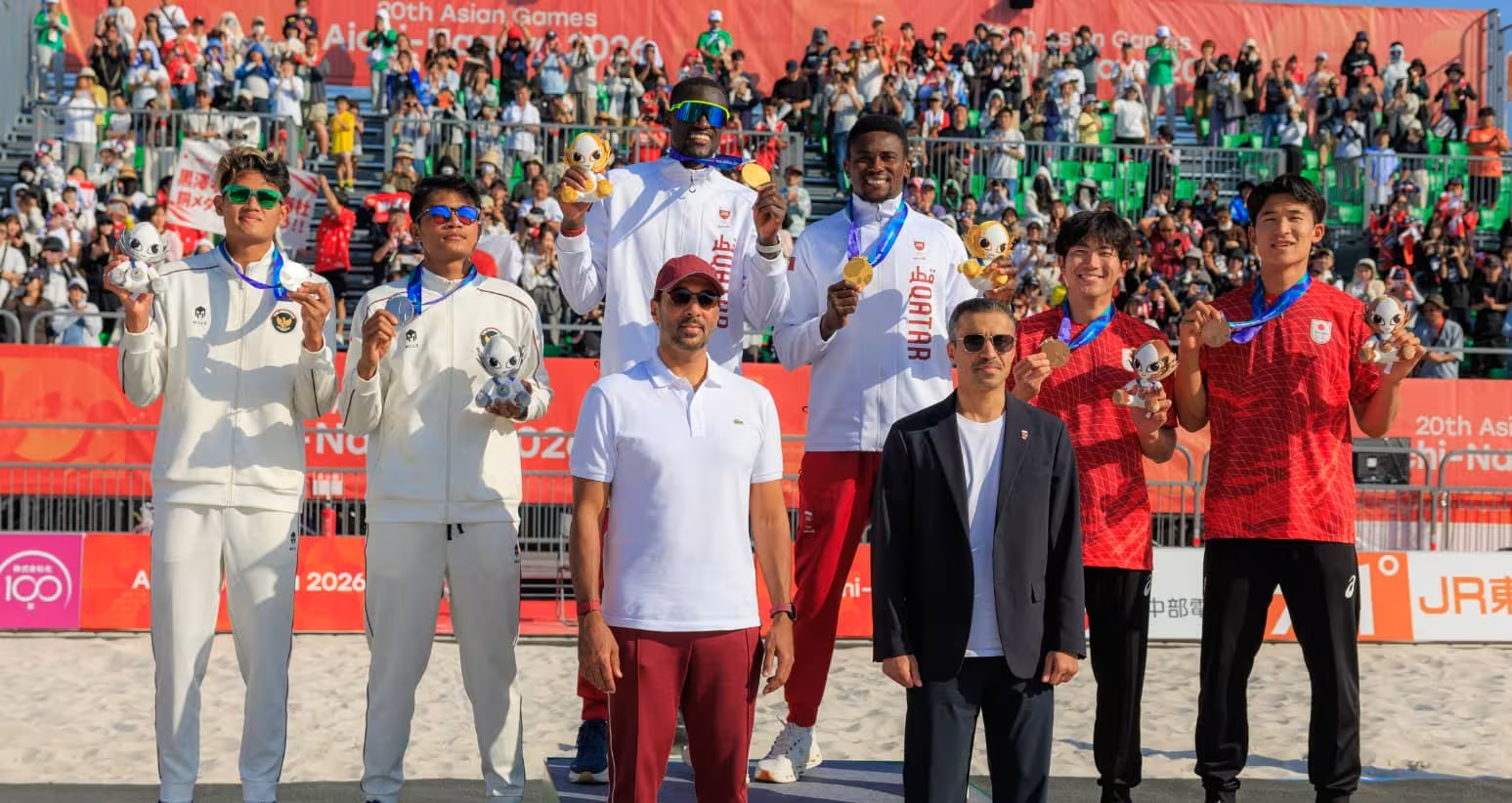
Team Qatar Complete Beach Volleyball Golden Hat-Trick
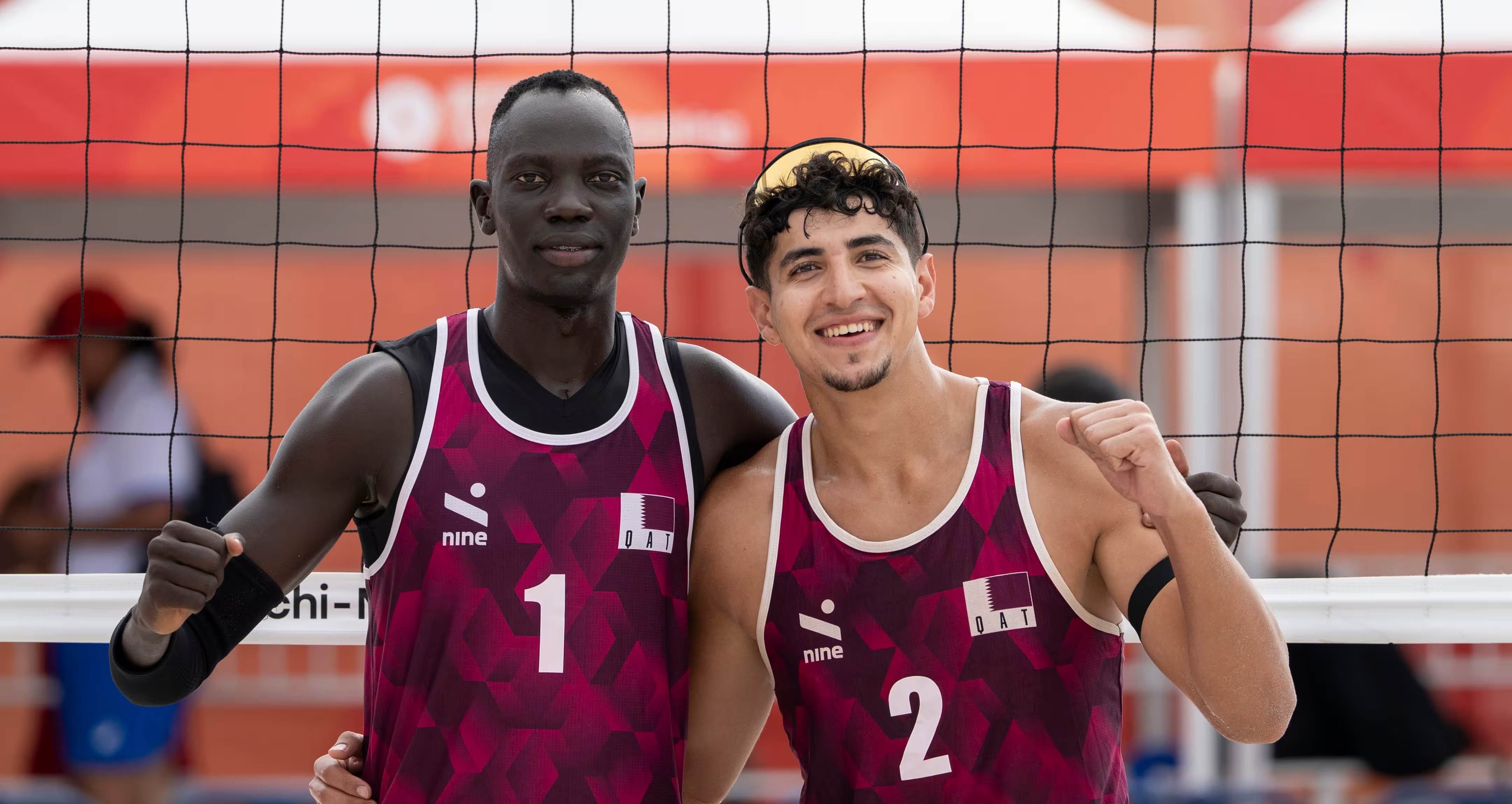
Aichi-Nagoya - Qatar’s beach volleyball pair Cherif Younousse and Ahmed Tijan were crowned Asian Games champions after a thrilling 2-1 victory over Indonesia in the final at Aichi-Nagoya 2026, successfully defending their title for a third consecutive edition and continuing Qatar’s outstanding record in Asian beach volleyball. Following the match, Jassim bin Rashid Al Buenain, Secretary General of the Qatar Olympic Committee, and Ali Ghanim Al Kuwari, President of the Qatar Volleyball Association, presented the Qatar team with their gold medals. Indonesia received silver, while Japan claimed bronze.The triumph underlined Qatar’s continued success in Asian beach volleyball, with Cherif and Tijan winning their third successive Asian Games gold following their victories at Jakarta-Palembang 2018 and Hangzhou 2022.The final began at a high tempo, with Indonesia taking an early 2-0 lead in the opening set before Team Qatar levelled at 2-2 and moved ahead 4-2. The contest remained close, with Indonesia drawing level at 17-17 before edging ahead 20-19 and taking the opening set 21-19.Team Qatar responded strongly in the second set, establishing an early 4-1 advantage before extending their lead to 7-3. Cherif and Tijan remained in control, moving 15-12 and then 18-14 ahead before reaching 20-16. They closed out the set 21-16 to level the match and force a deciding third set.In the decider, Team Qatar imposed themselves from the outset and raced into a 6-2 lead. Cherif and Tijan maintained their advantage to win the set 15-8 and seal a 2-1 victory and the gold medal.With the triumph, Cherif and Tijan further strengthened their standing among Asia’s leading beach volleyball pairs, successfully defending their Asian Games crown for the third consecutive edition and adding another gold medal to Qatar’s Asian Games record.Ali Ghanim Al Kuwari, President of the Qatar Volleyball Association, expressed his delight with Qatar’s historic achievement in winning a third consecutive Asian Games beach volleyball gold medal. “We congratulate our leadership and the Qatar Olympic Committee on this great achievement and dedicate this precious gold medal to our leadership, which has spared no effort in supporting sport and athletes,” he said.“I would also like to thank H.E. Sheikh Joaan bin Hamad Al Thani, President of the Qatar Olympic Committee, for his continued support of Qatari sport and athletes, which provides us with great motivation to continue working and achieving further success.“I would like to commend Cherif Younousse and Ahmed Tijan, who produced outstanding performances throughout the Games, showed tremendous fighting spirit and rose to the occasion. They fully deserved the gold medal after an excellent campaign. Despite some difficulties we faced before the tournament following Cherif’s injury, and our concerns over whether he would be able to participate, he was determined to play and, thankfully, we succeeded in retaining the gold medal.“Winning the title for the third consecutive edition confirms that this achievement is the result of sustained work, planning and significant support for the sport. We look forward to continuing this
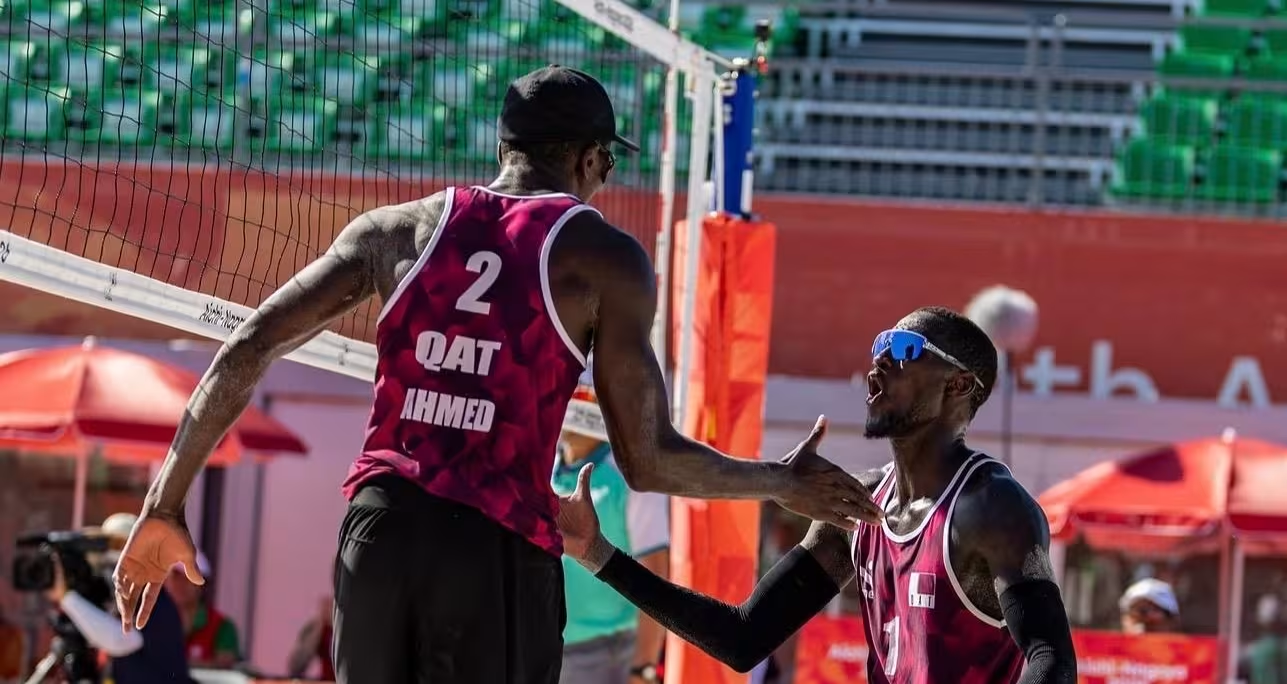
Team Qatar Beach Volleyball Aim to Retain Title against Indonesia
Aichi-Nagoya - The beach volleyball competitions at the Aichi-Nagoya 2026 Asian Games conclude today with a highly anticipated final between Team Qatar and Indonesia, as the Qatari pair aim to claim the gold medal and once again stand atop the Asian Games podium. Qatar’s Cherif Younousse and Ahmed Tijan enter the final after an exceptional run since the start of the competition, recording a series of consecutive victories from the group stage and continuing their impressive form through the knockout rounds.Team Qatar maintained their strong performances in the Round of 16 before overcoming Iran in the quarter-finals. They then faced one of their toughest matches of the tournament against Thailand in the semi-finals, securing their place in the final and moving to within one victory of the gold medal.Today’s match carries particular significance for the Qatari pair as they seek to complete their campaign with gold and successfully defend the Asian Games title they won at the previous edition in China.